Exam Date: Wednesday, January 23rd - 8:00 - 9:30 am
Directions: This will be a skill based exam.
Part I: Reading Skills. You will be asked to read an excerpt from a novel, answer 10 multiple-choice questions, and write about the piece intelligently.
Part II. Poetry. You will be asked to read a modern poem, answer five multiple-choice questions, and write about the piece intelligently.
Part III. You will compose a short essay, comparing and contrasting the novel excerpt and the poem from parts I and II.
Note: Please know the following literary devices: metaphor, simile, imagery, personification, alliteration, hyperbole, tone, allusion, foreshadow, and dramatic irony. If you do not remember them, please refer to our first poetry blog for definitions, or look them up.
Tuesday, January 8, 2019

Sunday, January 6, 2019
Due Wednesday, January 9th - Romeo & Juliet, Act I, Scenes ii & iii
Directions: In small groups, assign roles and read Romeo & Juliet, Act I, scenes ii & iii. Discuss what is being said. Use the left hand margin as a guide. Next, post a blog response, much like the last one we composed. Include 1-2 major passages, and explain the meaning behind some of the major moments from the text. How would you characterize Lord Capulet? Paris? How are Lady Capulet and the Nurse used as foils? How does Dramatic Irony come into play in these two scenes? Explore the possibilities. Engage with each other. Ask questions. What would you like to discuss in class on Wednesday. I look forward to your responses.


Wednesday, January 2, 2019
Due Monday, January 7th - Romeo & Juliet - Act I, scene i
Directions: Please reread Act I, scene i of Romeo and Juliet by William Shakespeare. Choose 1-2 major passages from the play and comment on the ideas, philosophy, and/or the motivations of the characters as well as the impact on the plot of the play. For example, what are the comedic elements in the play? How is Shakespeare using humor to prepare us for the tragedy about to ensue? How does Shakespeare use dramatic irony in the play? What is going on in the mind of Romeo? How does Shakespeare use foil characters? Tybalt and Benvolio?


Tuesday, January 1, 2019
Due Wednesday, January 2nd - Prologue
Directions: Please listen to Mr. Pellerin recite the Prologue to Romeo & Juliet. In this blog space, please post your initial thoughts. Given what you learned in the documentary about how Shakespeare "broke the mold," what do you anticipate will be different about this tragedy compared with other plays? What information does Shakespeare give us about the plot of the play in the prologue? What do you notice about the form and structure? He seems to give away the ending. What will happen in the end? In your opinion, why would Shakespeare give away the ending? This is a "live blog." Engage with each other.
Prologue
Two households, both alike in dignity,
In fair Verona, where we lay our scene,
From ancient grudge break to new mutiny,
Where civil blood makes civil hands unclean.
From forth the fatal loins of these two foes
A pair of star-cross'd lovers take their life;
Whose misadventured piteous overthrows
Do with their death bury their parents' strife.
The fearful passage of their death-mark'd love,
And the continuance of their parents' rage,
Which, but their children's end, nought could remove,
Is now the two hours' traffic of our stage;
The which if you with patient ears attend,
What here shall miss, our toil shall strive to mend.
Prologue
Two households, both alike in dignity,
In fair Verona, where we lay our scene,
From ancient grudge break to new mutiny,
Where civil blood makes civil hands unclean.
From forth the fatal loins of these two foes
A pair of star-cross'd lovers take their life;
Whose misadventured piteous overthrows
Do with their death bury their parents' strife.
The fearful passage of their death-mark'd love,
And the continuance of their parents' rage,
Which, but their children's end, nought could remove,
Is now the two hours' traffic of our stage;
The which if you with patient ears attend,
What here shall miss, our toil shall strive to mend.
Thursday, December 20, 2018
Shakespeare of the Day - Hamlet
DRAMATIS PERSONAE
CLAUDIUS king of Denmark.
HAMLET son to the late, and nephew to the present king.
POLONIUS lord chamberlain.
HORATIO friend to Hamlet.
LAERTES son to Polonius.
LUCIANUS nephew to the king.
VOLTIMAND, CORNELIUS, ROSENCRANTZ, GUILDENSTERN, OSRIC } courtiers.
A Gentleman,
A Priest.
MARCELLUS, BERNARDO } officers.
FRANCISCO a soldier.
REYNALDO servant to Polonius.
Players.
Two Clowns, grave-diggers.
FORTINBRAS prince of Norway.
A Captain.
English Ambassadors.
GERTRUDE queen of Denmark, and mother to Hamlet.
OPHELIA daughter to Polonius.
Lords, Ladies, Officers, Soldiers, Sailors, Messengers, and other Attendants.
Ghost of Hamlet’s Father.
Please peruse the "Shakespeare of the Day" selection: The Tragedy of Hamlet, Prince of Denmark. Which performance do you like best? Why?
CLAUDIUS king of Denmark.
HAMLET son to the late, and nephew to the present king.
POLONIUS lord chamberlain.
HORATIO friend to Hamlet.
LAERTES son to Polonius.
LUCIANUS nephew to the king.
VOLTIMAND, CORNELIUS, ROSENCRANTZ, GUILDENSTERN, OSRIC } courtiers.
A Gentleman,
A Priest.
MARCELLUS, BERNARDO } officers.
FRANCISCO a soldier.
REYNALDO servant to Polonius.
Players.
Two Clowns, grave-diggers.
FORTINBRAS prince of Norway.
A Captain.
English Ambassadors.
GERTRUDE queen of Denmark, and mother to Hamlet.
OPHELIA daughter to Polonius.
Lords, Ladies, Officers, Soldiers, Sailors, Messengers, and other Attendants.
Ghost of Hamlet’s Father.
(III. i. 64-96)
To be or not to be – that is the question:
Whether 'tis nobler in the mind to suffer
The slings and arrows of outrageous fortune,
Or to take arms against a sea of troubles
And, by opposing, end them. To die, to sleep –
No more – and by a sleep to say we end
The heartache and the thousand natural shocks
That flesh is heir to – `tis a consummation
Devoutly to be wished. To die, to sleep –
To sleep, perchance to dream. Ay, there's the rub,
For in that sleep of death what dreams may come,
When we have shuffled off this mortal coil,
Must give us pause. There's the respect
That makes calamity of so long life.
For who would bear the whips and scorns of time,
Th' oppressor's wrong, the proud man's contumely,
The pangs of despised love, the law's delay,
The insolence of office, and the spurns
That patient merit of th' unworthy takes,
When he himself might his quietus make
With a bare bodkin? Who would fardels bear,
To grunt and sweat under a weary life,
But that the dread of something after death,
The undiscovered country from whose bourn
No traveler returns, puzzles the will
And makes us rather bear those ills we have,
Than fly to others that we know not of?
Thus conscience does make cowards of us all,
And thus the native hue of resolution
Is sicklied o'er with the pale cast of thought,
And enterprises of great pitch and moment
With this regard their currents turn awry
And lose the name of action.
Below are four different interpretations of Hamlet's famous soliloquy from Act 3, scene 1.Please view all four clips in the following order:
1) 1948 - The timeless performance by Laurence Olivier.
2) 2000 - Ethan Hawke's Hamlet drifts into a Blockbuster video. Notice which section he walks through.
3) 1996 - Kenneth Brannah's Hamlet speaking a mirror image of himself (Note: Hamlet's Uncle Claudius and Polonius are hiding behind the glass).
4) 1990 - Mel Gibson's Hamlet - Notice the choice of location and the intensity of the performance.
To be or not to be – that is the question:
Whether 'tis nobler in the mind to suffer
The slings and arrows of outrageous fortune,
Or to take arms against a sea of troubles
And, by opposing, end them. To die, to sleep –
No more – and by a sleep to say we end
The heartache and the thousand natural shocks
That flesh is heir to – `tis a consummation
Devoutly to be wished. To die, to sleep –
To sleep, perchance to dream. Ay, there's the rub,
For in that sleep of death what dreams may come,
When we have shuffled off this mortal coil,
Must give us pause. There's the respect
That makes calamity of so long life.
For who would bear the whips and scorns of time,
Th' oppressor's wrong, the proud man's contumely,
The pangs of despised love, the law's delay,
The insolence of office, and the spurns
That patient merit of th' unworthy takes,
When he himself might his quietus make
With a bare bodkin? Who would fardels bear,
To grunt and sweat under a weary life,
But that the dread of something after death,
The undiscovered country from whose bourn
No traveler returns, puzzles the will
And makes us rather bear those ills we have,
Than fly to others that we know not of?
Thus conscience does make cowards of us all,
And thus the native hue of resolution
Is sicklied o'er with the pale cast of thought,
And enterprises of great pitch and moment
With this regard their currents turn awry
And lose the name of action.
Below are four different interpretations of Hamlet's famous soliloquy from Act 3, scene 1.Please view all four clips in the following order:
1) 1948 - The timeless performance by Laurence Olivier.
2) 2000 - Ethan Hawke's Hamlet drifts into a Blockbuster video. Notice which section he walks through.
3) 1996 - Kenneth Brannah's Hamlet speaking a mirror image of himself (Note: Hamlet's Uncle Claudius and Polonius are hiding behind the glass).
Wednesday, December 19, 2018
Shakespeare of the Day - Titus Andronicus
Players
Bassianus, brother to Saturninus, in love with Lavinia
Titus Andronicus, a Roman, general against the Goths
Marcus Andronicus, tribune of the people, and brother to Titus
Lucius, Quintus, Martius, Mutius, sons to Titus Andronicus
Lavinia, daughter to Titus Andronicus
Young Lucius, a boy, son to Lucius
Tamora, queen of the Goths
Alarbus, Demetrius, Chiron, sons to Tamora
Aaron, a Moor, beloved by Tamora
What, madam! be dishonour'd openly,
And basely put it up without revenge?
TAMORA
be won at last;
Dissemble all your griefs and discontents:
You are but newly planted in your throne;
Lest, then, the people, and patricians too,
Upon a just survey, take Titus' part,
And so supplant you for ingratitude,
Which Rome reputes to be a heinous sin,
Yield at entreats; and then let me alone:
I'll find a day to massacre them all
And raze their faction and their family,
The cruel father and his traitorous sons,
To whom I sued for my dear son's life,
And make them know what 'tis to let a queen
Kneel in the streets and beg for grace in vain. (1.1.18)
Tuesday, December 11, 2018
Introduction to Shakespeare - Take Notes
First Performed
|
Plays
|
First Printed
|
1590-91
|
Henry VI,
Part I (H)
|
1594?
|
1590-91
|
Henry VI,
Part II (H)
|
1594?
|
1591-92
|
Henry VI,
Part III (H)
|
1623
|
1592-93
|
Richard III (T)
|
1597
|
1592-93
|
Comedy of
Errors (C)
|
1623
|
1593-94
|
Titus
Andronicus (T)
|
1594
|
1593-94
|
1623
|
|
1594-95
|
1623
|
|
1594-95
|
1598?
|
|
1594-95
|
Romeo and
Juliet (T)
|
1597
|
1595-96
|
Richard II (T)
|
1597
|
1595-96
|
1600
|
|
1596-97
|
King John (H)
|
1623
|
1596-97
|
1600
|
|
1597-98
|
Henry IV,
Part I (H)
|
1598
|
1597-98
|
1600
|
|
1598-99
|
1600
|
|
1598-99
|
Henry V (H)
|
1600
|
1599-1600
|
Julius
Caesar (T)
|
1623
|
1599-1600
|
As You Like
It (C)
|
1623
|
1599-1600
|
Twelfth
Night (C)
|
1623
|
1600-01
|
Hamlet (T)
|
1603
|
1600-01
|
1602
|
|
1601-02
|
1609
|
|
1602-03
|
1623
|
|
1604-05
|
1623
|
|
1604-05
|
Othello (T)
|
1622
|
1605-06
|
King Lear (T)
|
1608
|
1605-06
|
Macbeth (T)
|
1623
|
1606-07
|
1623
|
|
1607-08
|
Coriolanus (T)
|
1623
|
1607-08
|
Timon of
Athens (T)
|
1623
|
1608-09
|
Pericles (R)
|
1609
|
1609-10
|
Cymbeline (T)
|
1623
|
1610-11
|
1623
|
|
1611-12
|
The Tempest (R)
|
1623
|
1612-13
|
Henry VIII (H)
|
1623
|
1612-13
|
1634
|
This chart shows samples of the changes in English.
#1 is Old English or Anglo-Saxon (circa 450-1066 CE).
#2 is Middle English (circa 1066-1450 AD).
#3 is Modern English from about the time of Shakespeare.
#4 is another sample of Modern English, but it is more recent than #3.

Note taking Questions:
1. We only know five facts about Shakespeare’s life. Please list them below. 2. Taking into account what little we know about Shakespeare, how is it possible that so many people write about his life?
3. Describe the Elizabethan era.
4. Who is Christopher Marlowe? Why is he important? How does his work differ from Shakespeare’s?
5. Name and describe the two most prominent theatres during Shakespeare’s time.
6. Who is Elizabeth? Why is she so important to our knowledge of Shakespeare?
7. Describe how clothes marked one’s social status.
8. How did William Shakespeare “Break the Mold” in theatre. In other words, why is he considered the greatest writer of all time?
Subscribe to:
Posts (Atom)
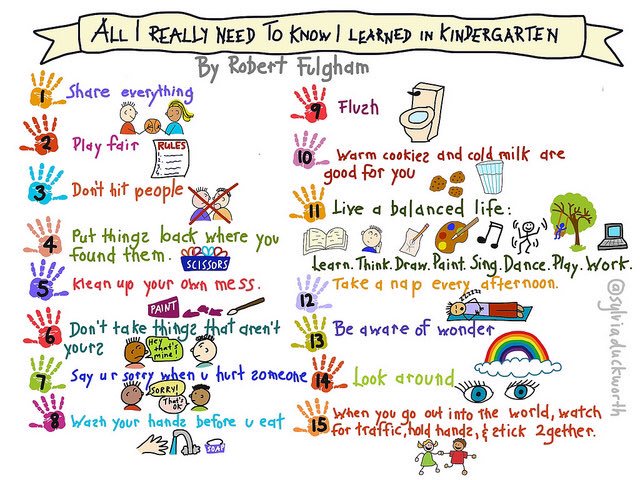
Due Friday, June 14th - All I Really Needed to Know I Learned in Mr. Pellerin's Freshmen English
Overview : Go back to our first blog, and walk through the 2018-2019 school year. Revisit the books we read and our class responses. Look...
-
Overview : We have been discussing the idea of self. How does one become an authentic self? This brings us back to "Allegory of...
-
 Overview : Go back to our first blog, and walk through the 2018-2019 school year. Revisit the books we read and our class responses. Look...
 -
Overview : The Shakespearean sonnet consists of three quatrains (four-line stanzas), rhyming abab cdcd efef, and a couplet (a two-line sta...