Sunday, September 16, 2018

"First Hour" by Sharon Olds - How do we define self? Why novels?

Overview:  People did not look fondly on the "novel."  Many associated it with women, and therefore concluded it would have no intellectual value.  Many in the literary world denounced novels as a "young woman's journal."  Ironically, men would dominate the use of the genre and women would be blocked out.  Pioneers like Jane Austen and the Bronte sisters would be forced to be anonymous or use men's names in order to publish.

Why is the novel so important?

In my humble opinion, novels teach us that we are not alone.  Through narration we see into the minds of other people.  Authors must have great empathy; setting their views aside in order to understand the characters they create.  Their characters will represent real people.

Jane Austen not only pushed the boundaries of how society views women, but also men in her novels.  This conversation connects to how we define "self."  It is not something born in isolation.  Self is defined from infancy through the context we are born into.  There is no clean slate.  Or is there?  Sharon Olds investigates this idea in her poem "First Hour."


Directions:  Read the following poem by Sharon Olds, and briefly respond to her complicated notion of self.  Please use direct lines from the poem in order to explain how she made you feel about the idea of self.


First Hour
Sharon Olds

That hour, I was most myself. I had shrugged
my mother slowly off, I lay there
taking my first breaths, as if
the air of the room was blowing me
like a bubble. All I had to do
was go out along the line of my gaze and back,
feeling gravity, silk, the
pressure of the air a caress, smelling on
myself her creamy blood. The air
was softly touching my skin and mouth,
entering me and drawing forth the little
sighs I did not know as mine.
I was not afraid. I lay in the quiet
and looked, and did the wordless thought,
my mind was getting its oxygen
direct, the rich mix by mouth.
I hated no one. I gazed and gazed,
and everything was interesting, I was
free, not yet in love, I did not
belong to anyone, I had drunk
no milk yet—no one had
my heart. I was not very human. I did not
know there was anyone else. I lay
like a god, for an hour, then they came for me
and took me to my mother.

Wednesday, September 12, 2018

"The Danger of the Single Story" and the Importance of Becoming Global Citizens

Overview:  Every story is just a piece of the larger story of our lives.  Yet, we tend to judge people's lives on moments.  We do the same with literature.

Directions:  Please view "The Danger of a Single Story" by Chimamanda Ngozi Adichie and comment on the ways in which we judge others/authors/characters by a single story.  Think about people that you have judged by one moment. How do you define them?  Now, think about novels.  How have you judged authors/characters by a single reading?  Have you had any experiences where your opinion changed for people and authors?

Next, peruse my global website.  Please comment on something you found interesting and would like to ask me for more information.


"The Danger of a Single Story"
by Chimamanda Ngozi Adichie

Culture. The word originated with the definition"to cultivate land," and evolved into a "cultivation of the mind." Today the word is ambiguous, referring to our attachment to a place, traditions, and beliefs. It also has ominously been used to discuss an "otherness" through stereotypes.

Chimamanda Ngozi Adichie shares her experiences with the notion of culture in "The Danger of a Single Story" in an important TED Talk that will explain the importance of global intelligence.


"Mr. P. Goes Global"
by Eric Pellerin


Sunday, September 2, 2018

The Road to Enlightenment . . . "Allegory of a Cave" by Plato

Overview: In our first unit, we will be exploring the beginnings of storytelling through fiction. The first question we may ask ourselves is – why fiction

 Literature asks us to be philosophical, to think about our place in the world. When we read, one could say we are working toward enlightenment

What does that word mean to you? Enlightenment. Authentic self

We will begin this journey with a piece from the 4th century, Plato’s Allegory of a Cave. As you read along with me, think about what you see, both literally and symbolically.


Directions: Please read and study the following from Plato’s Republic, titled, Allegory of a Cave. Next, in this blog space:
1) Discuss a personal experience where you experienced liberation from the cave.
2) Describe a character who went through the stages using one of the summer reading selections. 

Engage with each other. Use the text. Be genuine and authentic. Think about the value of words by being concise. Think about your audience. Also, revisit the blog. Read and respond to your fellow classmates. Get a dialogue going. Challenge each other. Be bold. Be brilliant.


Plato's Allegory of the Cave
(4th c. B.C.) 
(From Plato's Republic, Book 7) 

" And now, I said (Plato), let me show in a figure how far our nature is enlightened or unenlightened: --Behold! human beings living in a underground cave, which has a mouth open towards the light and reaching all along the cave; here they have been from their childhood, and have their legs and necks chained so that they cannot move, and can only see before them, being prevented by the chains from turning round their heads. Above and behind them a fire is blazing at a distance, and between the fire and the prisoners there is a raised way; and you will see, if you look, a low wall built along the way, like the screen which marionette players have in front of them, over which they show the puppets.

- I see (Glaucon).

And do you see, I said, men passing along the wall carrying all sorts of vessels, and statues and figures of animals made of wood and stone and various materials, which appear over the wall? Some of them are talking, others silent.

- You have shown me a strange image, and they are strange prisoners.

Like ourselves, I replied; and they see only their own shadows, or the shadows of one another, which the fire throws on the opposite wall of the cave?

- True, he said; how could they see anything but the shadows if they were never allowed to move their heads?

And of the objects which are being carried in like manner they would only see the shadows?

- Yes, he said.

And if they were able to converse with one another, would they not suppose that they were naming what was actually before them?

- Very true.

And suppose further that the prison had an echo which came from the other side, would they not be sure to fancy when one of the passers-by spoke that the voice which they heard came from the passing shadow?

- No question, he replied.


To them, I said, the truth would be literally nothing but the shadows of the images.

- That is certain.

And now look again, and see what will naturally follow if the prisoners are released and disabused of their error. At first, when any of them is liberated and compelled suddenly to stand up and turn his neck round and walk and look towards the light, he will suffer sharp pains; the glare will distress him, and he will be unable to see the realities of which in his former state he had seen the shadows; and then conceive some one saying to him, that what he saw before was an illusion, but that now, when he is approaching nearer to being and his eye is turned towards more real existence, he has a clearer vision, -what will be his reply? And you may further imagine that his instructor is pointing to the objects as they pass and requiring him to name them, will he not be perplexed? Will he not fancy that the shadows which he formerly saw are truer than the objects which are now shown to him?

- Far truer.

And if he is compelled to look straight at the light, will he not have a pain in his eyes which will make him turn away to take and take in the objects of vision which he can see, and which he will conceive to be in reality clearer than the things which are now being shown to him?

- That is true.

And suppose once more, that he is reluctantly dragged up a steep and rugged ascent, and held fast until he 's forced into the presence of the sun himself, is he not likely to be pained and irritated? When he approaches the light his eyes will be dazzled, and he will not be able to see anything at all of what are now called realities.

- Not all in a moment, he said.

He will require to grow accustomed to the sight of the upper world. And first he will see the shadows best, next the reflections of men and other objects in the water, and then the objects themselves; then he will gaze upon the light of the moon and the stars and the spangled heaven; and he will see the sky and the stars by night better than the sun or the light of the sun by day?

- Certainly.

Last of he will be able to see the sun, and not mere reflections of him in the water, but he will see him in his own proper place, and not in another; and he will contemplate him as he is.

- Certainly.

He will then proceed to argue that this is he who gives the season and the years, and is the guardian of all that is in the visible world, and in a certain way the cause of all things which he and his fellows have been accustomed to behold?

Clearly, he said, he would first see the sun and then reason about him. And when he remembered his old habitation, and the wisdom of the cave and his fellow-prisoners, do you not suppose that he would felicitate himself on the change, and pity them?

- Certainly, he would.

And if they were in the habit of conferring honors among themselves on those who were quickest to observe the passing shadows and to remark which of them went before, and which followed after, and which were together; and who were therefore best able to draw conclusions as to the future, do you think that he would care for such honors and glories, or envy the possessors of them? Would he not say with Homer, Better to be the poor servant of a poor master, and to endure anything, rather than think as they do and live after their manner?

- Yes, he said, I think that he would rather suffer anything than entertain these false notions and live in this miserable manner.


Imagine once more, I said, such a one coming suddenly out of the sun to be replaced in his old situation; would he not be certain to have his eyes full of darkness?

- To be sure, he said.

And if there were a contest, and he had to compete in measuring the shadows with the prisoners who had never moved out of the cave, while his sight was still weak, and before his eyes had become steady (and the time which would be needed to acquire this new habit of sight might be very considerable) would he not be ridiculous? Men would say of him that up he went and down he came without his eyes; and that it was better not even to think of ascending; and if any one tried to loose another and lead him up to the light, let them only catch the offender, and they would put him to death.


- No question, he said.


Tuesday, August 28, 2018

Welcome to Freshmen English!


Mission and Philosophy: 

We will be creating a literary community through reading, writing, and blogging; discovering classic literature from the past and present through voices from around the world.  I want you to learn how literature makes us know that we are not alone; we are spiritually connected and can feel safe.


How will we do this?

Freshmen English has traditionally been a preparatory course, culminating in an exam to be taken in the spring for college credit. However, to those of us who teach language arts, this course is more about teaching students to read and write with greater insight, as well as a chance to help students develop a genuine sense of empathy through literature.
This course hopes to re-examine the entire idea of “rigor” by implementing global citizenship into every aspect of the curriculum, making it a richer experience and creating a model for curriculum at Andover High School.  Each section of the unit will have three components:
1) Global Citizenship
2) Well-chosen literary selections which connect to the former and an element of fiction
3) Experiences where students find connections in literature to themselves and the world.
The framework of the course will consist of a series of existential questions from Dr. William Gaudelli’s research.  Each question, piece of literature, and overall learning experience will build on the next. Toward the end of term two, students will be having experiences where they combine all these elements and have direct contact with students from another country, students from an adjoining city, and share their work in a public forum.
In addition, I hope to rethink “grading” this year. I will reimaging my grading system focusing on the big picture, the student’s personal growth, enthusiasm, participation, authenticity, and passion for the ideas we discuss. 
I hope you enjoy the course, and I look forward to sharing in this journey with all of you.


Beginnings:  The Art of Fiction

·       Allegory of a Cave by Plato
·       Anthem by Ayn Rand
·       “Introduction to Poetry” by Billy Collins
·       “First Hour” by Sharon Olds
·       “Poetry” by Marianne Moore
·       “The Danger of the Single Story” by Chimamanda Adichie
·       Selections from Mythology by Edith Hamilton
·       “Acting” by Suzanne Cleary
·       Oedipus the King by Sophocles
·       The Minority Report (2002)     
·       “Mid-term Break” by Seamus Heaney                                 
·       Big Fish by Daniel Wallace
·       “Don’t Ask Me Where I’m From, Ask Me Where I’m Local” by Taiye Selasi
·        “Death of a Moth” by Virginia Woolf
·       “Animals” by Miller Williams
·        “God Says Yes to Me” by Kaylin Haught
·       “The Cord” by Leanne O’Sullivan
·        “It’s a Woman’s World” by Eavan Boland
·       “Barbie’s Ferrari” by Lynne McMahon
·       “Dover Beach” by Matthew Arnold
·       “My Life” by Joe Wenderoth
·       “Where is She” by Peter Cherches


Shakespeare:  The Invention of the Human

·       Romeo and Juliet by William Shakespeare
·       “The Panic Bird” by Robert Phillips
·        “I Finally Managed to Speak to Her” by Hal Sirowitz
·       Julius Caesar by William Shakespeare
·       “Selections from Shakespeare: The Invention of the Human by Harold Bloom
·       “Sonnet 116” by William Shakespeare
·       "Sonnet 292" from the Canzoniere by Francesco Petrarch, translated by Anthony Mortimer
·       “Holy Sonnet X: Death be not proud” by John Donne
·       “Holy Sonnet V:  If poisonous minerals” by John Donne
·       “Unholy Sonnets” by Mark Jarman
·       Selections from: Henry V, Titus Andronicus, and Twelfth Night by William Shakespeare
·       “I Finally Managed to Speak to Her” by Hal Sirowitz
·       “Sonnet 147: My love is as a fever” by William Shakespeare
·        “After Us” by Connie Wanek
·       “Beyond Recall” by Sharon Bryan
·        “What I Would Do” by Marc Pattersen
·       “The Meadow” by Kate Knapp Johnson
·       “Only One of My Deaths” by Dean Young
·       “May” by Bruce Weigel
·        “The Dead” by Susan Mitchell


Revolution as Humanism:  Empathy for all Living Beings

·       Animal Farm by George Orwell    
·       “The Bet” by Anton Chekov
·       “The Ones Who Walk Away from Omelas” by Ursula K. Le Guin.
·       “Don’t Ask Me Where I’m From, Ask me Where I’m Local?” by Taiye Selasi
·       Won’t You Be My Neighbor (2018)                               
·       Selections from Les Miserables by Victor Hugo (novel and musical)      
·       “The Story of an Hour” by Kate Chopin
·       “Happy Marriage” by Taslima Nasrin
·       Unity (2015)
·       “Killing the Animals” by Weslet McNair
·       “The Space Heater” by Sharon Olds
·       “No Return” by William Matthews
·       “A Barred Owl” by Richard Wilbur
·       “The History Teacher” by Billy Collins
·       13th (2016)
·       “Fifth Grade Autobiography” by Rita Dove
·       “Recitatif” by Toni Morrison


Major Projects

·       Creating a musical of Romeo and Juliet                
·       Writing a screenplay and performing scenes from Animal Farm
·       Writing mythological vignettes in the style of Big Fish
·       Developing and sketching a graphic novel version of Oedipus the King
·       Writing and performing Spoken Word/Hip Hop version of classic poems/sonnets
·       Writing and performing an original science fiction play about a revolution


Assessments:

Class Participation, Blogs, and Homework 70%:  Every night you will read a selection from the works above and compose a blog response. If you are absent, please view the blog and respond when you are able. Criteria and rubrics for the above will be made available. 

Writing & Major Assignments 30%:  This category includes all major writing assignments, in-class essays, and final projects.  Criteria and rubrics for the above will be made available.

Aspen:  Grades and progress reports will be consistently posted on Aspen.  It is your responsibility to track your progress.


Classroom Behavior:

Students must adhere to the rules of conduct outlined in the Andover High School Student Handbook 2018-2019 edition.   If you act like an authentic adult, you will be treated in kind.


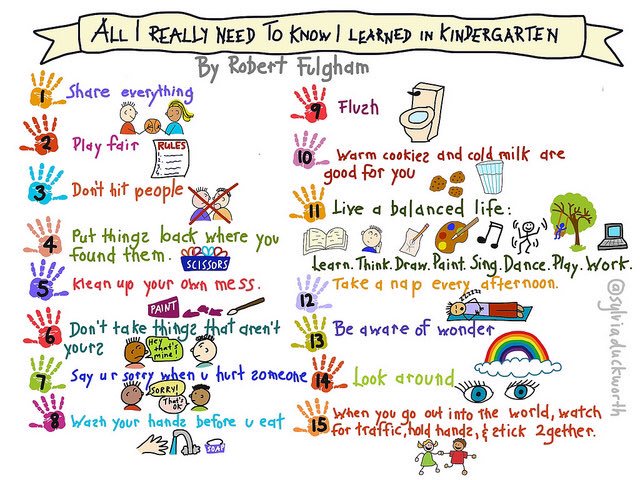
Due Friday, June 14th - All I Really Needed to Know I Learned in Mr. Pellerin's Freshmen English

Overview :  Go back to our first blog, and walk through the 2018-2019 school year.  Revisit the books we read and our class responses.  Look...