
Tuesday, January 29, 2019
Due Thursday, January 31st - Romeo & Juliet - Act II - Characterization

Sunday, January 20, 2019
Freshmen Mid-Term Exam
Directions: In a Google Doc, answer all 15 multiple choice questions and compose your essay. Then, post it to Turnitin.com. I posted the exam below, so you can cut and paste the text for your essays.
Part A.
Tan’s acclaimed novel The Joy Luck Club focuses on four Chinese American immigrant families living in San Francisco. Tan focuses heavily on mother-daughter relationships, and the following excerpt is no exception. This selection examines the relationship of young Waverly Jong and her mother after Waverly becomes a successful child chess prodigy.
I was six when my mother taught me the art of invisible strength. It was a strategy for winning arguments, respect from others, and eventually, though neither of us knew it at the time, chess games.
"Bite back your tongue," scolded my mother when I cried loudly, yanking her hand toward the store that sold bags of salted plums. At home, she said, "Wise guy, he not go against wind. In Chinese we say, Come from South, blow with wind-poom!-North will follow. Strongest wind cannot be seen."
That winter, we had gone to the annual Christmas party held at the First Chinese Baptist Church at the end of the alley. Donated gifts were given out to all of the children there. My older brother Vincent was the one who actually got the chess set. It was obviously used and, as we discovered later, it was missing a black pawn and a white knight. When we got home, my mother told Vincent to throw the chess set away. My brothers had deaf ears. They were already lining up the chess pieces and reading from the dog-eared instruction book. I watched Vincent and Winston play during Christmas week. The chessboard seemed to hold elaborate secrets waiting to be untangled.
"Let me! Let me!" I begged between games when one brother or the other would sit back with a deep sigh of relief and victory, the other annoyed, unable to let go of the outcome. Vincent at first refused to let me play, but when I offered my Life Savers as replacements for the buttons that filled in for the missing pieces, he relented. He chose the flavors: wild cherry for the black pawn and peppermint for the white knight. Winner could eat both.
(Line 5) I read the rules and looked up all the big words in a dictionary. I borrowed books from the Chinatown library. I studied each chess piece, trying to absorb the power each contained.
I learned about opening moves and why it's important to control the center early on; the shortest distance between two points is straight down the middle. I learned about the middle game and why tactics between two adversaries are like clashing ideas; the one who plays better has the clearest plans for both attacking and getting out of traps. I learned why it is essential in the endgame to have foresight, a mathematical understanding of all possible moves, and patience; all weaknesses and advantages become evident to a strong adversary and are obscured to a tiring opponent. I discovered that for the whole game one must gather invisible strengths and see the endgame before the game begins.
I also found out why I should never reveal "why" to others. A little knowledge withheld is a great advantage one should store for future use. That is the power of chess. It is a game of secrets in which one must show and never tell.
On a cold spring afternoon, while walking home from school, I detoured through the playground at the end of our alley. I saw a group of old men, two seated across a folding table playing a game of chess, others smoking pipes, eating peanuts, and watching. I ran home and grabbed Vincent's chess set, which was bound in a cardboard box with rubber bands. I also carefully selected two prized rolls of Life Savers. I came back to the park and approached a man who was observing the game.
"Want to play?" I asked him. His face widened with surprise and he grinned as he looked at the box under my arm. "Little sister, been a long time since I play with dolls," he said, smiling benevolently. I quickly put the box down next to him on the bench and displayed my retort.
(Line 10) Lau Po, as he allowed me to call him, turned out to be a much better player than my brothers. I lost many games and many Life Savers. But over the weeks, with each diminishing roll of candies, I added new secrets. Lau Po gave me the names. The Double Attack from the East and West Shores. Throwing Stones on the Drowning Man. The Sudden Meeting of the Clan. The Surprise from the Sleeping Guard. The Humble Servant Who Kills the King. Sand in the Eyes of Advancing Forces. A Double Killing Without Blood.
There were also the fine points of chess etiquette. Keep captured men in neat rows, as well-tended prisoners. Never announce "Check" with vanity, lest someone with an unseen sword slit your throat. Never hurl pieces into the sandbox after you have lost a game, because then you must find them again, by yourself, after apologizing to all around you. By the end of the summer, Lau Po had taught me all he knew, and I had become a better chess player.
A man who watched me play in the park suggested that my mother allow me to play in local chess tournaments. During my first tournament, my mother sat with me in the front row as I waited for my turn. I frequently bounced my legs to unstick them from the cold metal seat of the folding chair. When my name was called, I leapt up. My mother unwrapped something in her lap. It was her chang, a small tablet of red jade which held the sun's fire. "Is luck," she whispered, and tucked it into my dress pocket. I turned to my opponent, a fifteen-year-old boy from Oakland. He looked at me, wrinkling his nose.
As I began to play, the boy disappeared, the color ran out of the room, and I saw only my white pieces and his black ones waiting on the other side. A light wind began blowing past my ears. It whispered secrets only I could hear.
"Blow from the South," it murmured. "The wind leaves no trail." I saw a clear path, the traps to avoid. The crowd rustled. "Shhh! Shhh!" said the corners of the room. The wind blew stronger. "Throw sand from the East to distract him." The knight came forward ready for the sacrifice. The wind hissed, louder and louder. "Blow, blow, blow. He cannot see. He is blind now. Make him lean away from the wind so he is easier to knock down."
(Line 15) "Check," I said, as the wind roared with laughter. The wind died down to little puffs, my own breath.
My mother placed my first trophy next to a new plastic chess set that the neighborhood Tao society had given to me. I attended more tournaments, each one farther away from home. I won all games, in all divisions. The Chinese bakery downstairs from our flat displayed my growing collection of trophies in its window, amidst the dust- covered cakes that were never picked up. The day after I won an important regional tournament, the window encased a fresh sheet cake with whipped-cream frosting and red script saying "Congratulations, Waverly Jong, Chinatown Chess Champion." Soon after that, a flower shop, headstone engraver, and funeral parlor offered to sponsor me in national tournaments. That's when my mother decided I no longer had to do the dishes. Winston and Vincent had to do my chores.
By my ninth birthday, I was a national chess champion. I was still some 429 points away from grand-master status, but I was touted as the Great American Hope, a child prodigy and a girl to boot. They ran a photo of me in Life magazine next to a quote in which Bobby Fischer said, "There will never be a woman grand master." "Your move, Bobby," said the caption.
I no longer played in the alley of Waverly Place. I never visited the playground where the pigeons and old men gathered. I went to school, then directly home to learn new chess secrets, cleverly concealed advantages, more escape routes.
My parents made many concessions to allow me to practice. One time I complained that the bedroom I shared was so noisy that I couldn't think. Thereafter, my brothers slept in a bed in the living room facing the street. I said I couldn't finish my rice; my head didn't work right when my stomach was too full. I left the table with half- finished bowls and nobody complained. But there was one duty I couldn't avoid. I had to accompany my mother on Saturday market days when I had no tournament to play. My mother would proudly walk with me, visiting many shops, buying very little. "This my daughter Wave-ly Jong," she said to whoever looked her way.
(Line 20) One day after we left a shop I said under my breath, "I wish you wouldn't do that, telling everybody I'm your daughter." My mother stopped walking.
Crowds of people with heavy bags pushed past us on the sidewalk, bumping into first one shoulder, than another.
"Aii-ya. So shame be with mother?" She grasped my hand even tighter as she glared at me.
I looked down. "It's not that, it's just so obvious. It's just so embarrassing." "Embarrass you be my daughter?" Her voice was cracking with anger. "That's not what I meant. That's not what I said."
"What you say?"
I knew it was a mistake to say anything more, but I heard my voice speaking, "Why do you have to use me to show off? If you want to show off, then why don't you learn to play chess?"
(Line 25) My mother's eyes turned into dangerous black slits. She had no words for me, just sharp silence.
I felt the wind rushing around my hot ears. I jerked my hand out of my mother's tight grasp and spun around, knocking into an old woman. Her bag of groceries spilled to the ground.
"Aii-ya! Stupid girl!" my mother and the woman cried. Oranges and tin cans careened down the sidewalk. As my mother stooped to help the old woman pick up the escaping food, I took off.
I raced down the street, dashing between people, not looking back as my mother screamed shrilly, "Meimei! Meimei!" I fled down an alley, past dark, curtained shops and merchants washing the grime off their windows. I sped into the sunlight, into a large street crowded with tourists examining trinkets and souvenirs. I ducked into another dark alley, down another street, up another alley. I ran until it hurt and I realized I had nowhere to go, that I was not running from anything. The alleys contained no escape routes.
My breath came out like angry smoke. It was cold. I sat down on an upturned plastic pail next to a stack of empty boxes, cupping my chin with my hands, thinking hard. I imagined my mother, first walking briskly down one street or another looking for me, then giving up and returning home to await my arrival. After two hours, I stood up on creaking legs and slowly walked home. The alley was quiet and I could see the yellow lights shining from our flat like two tiger's eyes in the night. I climbed the sixteen steps to the door, advancing quietly up each so as not to make any warning sounds. I turned the knob; the door was locked. I heard a chair moving, quick steps, the locks turning-click! click! click!-and then the door opened.
(Line 30) "About time you got home," said Vincent. "Boy, are you in trouble." He slid back to the dinner table. On a platter were the remains of a large fish, its fleshy head still connected to bones swimming upstream in vain escape. Standing there waiting for my punishment, I heard my mother speak in a dry voice.
"We not concerning this girl. This girl not have concerning for us." Nobody looked at me. Bone chopsticks clinked against the inside of bowls being emptied into hungry mouths.
I walked into my room, closed the door, and lay down on my bed. The room was dark, the ceiling filled with shadows from the dinnertime lights of neighboring flats.
In my head, I saw a chessboard with sixty-four black and white squares. Opposite me was my opponent, two angry black slits. She wore a triumphant smile. "Strongest wind cannot be seen," she said.
Her black men advanced across the plane, slowly marching to each successive level as a single unit. My white pieces screamed as they scurried and fell off the board one by one. As her men drew closer to my edge, I felt myself growing light. I rose up into the air and flew out the window. Higher and higher, above the alley, over the tops of tiled roofs, where I was gathered up by the wind and pushed up toward the night sky until everything below me disappeared and I was alone.
(Line 35) I closed my eyes and pondered my next move.
"Rules of the Game" Multiple Choice Questions
Directions: Select the options that best answers the questions. Note: Parenthetical numbers next to questions or answers refer to the corresponding paragraph number in the story.
1. What is the best interpretation of the mother’s advice: “Wise guy, he not go against wind. In Chinese we say, Come from South, blow with wind-poom!-North will follow. Strongest wind cannot be seen"? (2).
a. It is better to not complain and keep your thoughts hidden
b. Sailing requires one to follow the wind rather than try to sail into it
c. It is important to give back to the community that you live in
d. Wise men use the wind to guide their course
I think you are most yourself when you are swimming;
slicing the water with each stroke,
the funny way you breathe, your mouth cocked
as though you're yawning.
You're neither fantastic nor miserable (Line 5)
at getting from here to there.
You wouldn't win any medals, Dad,
but you wouldn't drown.
I think how different everything might have been
had I judged your loving (Line 10)
like I judge your sidestroke, your butterfly,
your Australian crawl.
But I always thought I was drowning
in that icy ocean between us,
I always thought you were moving too slowly to save me, (Line 15)
When you were moving as fast as you can.
"Not Bad, Dad" Multiple Choice
Directions: Select the options that best answers the questions.
11. The writer’s tone is .
a. bitter
b. celebratory
c. sympathetic
d. melancholic
12. The descriptions of the speaker’s father reveals that he was
a. an awful father
b. a decent father
c. the best dad in the world
d. an absent father
13. In the poem, swimming is used as a
Part A.
Tan’s acclaimed novel The Joy Luck Club focuses on four Chinese American immigrant families living in San Francisco. Tan focuses heavily on mother-daughter relationships, and the following excerpt is no exception. This selection examines the relationship of young Waverly Jong and her mother after Waverly becomes a successful child chess prodigy.
“Rules of the Game” by Amy Tan,
excerpted from The Joy Luck Club
I was six when my mother taught me the art of invisible strength. It was a strategy for winning arguments, respect from others, and eventually, though neither of us knew it at the time, chess games.
"Bite back your tongue," scolded my mother when I cried loudly, yanking her hand toward the store that sold bags of salted plums. At home, she said, "Wise guy, he not go against wind. In Chinese we say, Come from South, blow with wind-poom!-North will follow. Strongest wind cannot be seen."
That winter, we had gone to the annual Christmas party held at the First Chinese Baptist Church at the end of the alley. Donated gifts were given out to all of the children there. My older brother Vincent was the one who actually got the chess set. It was obviously used and, as we discovered later, it was missing a black pawn and a white knight. When we got home, my mother told Vincent to throw the chess set away. My brothers had deaf ears. They were already lining up the chess pieces and reading from the dog-eared instruction book. I watched Vincent and Winston play during Christmas week. The chessboard seemed to hold elaborate secrets waiting to be untangled.
"Let me! Let me!" I begged between games when one brother or the other would sit back with a deep sigh of relief and victory, the other annoyed, unable to let go of the outcome. Vincent at first refused to let me play, but when I offered my Life Savers as replacements for the buttons that filled in for the missing pieces, he relented. He chose the flavors: wild cherry for the black pawn and peppermint for the white knight. Winner could eat both.
(Line 5) I read the rules and looked up all the big words in a dictionary. I borrowed books from the Chinatown library. I studied each chess piece, trying to absorb the power each contained.
I learned about opening moves and why it's important to control the center early on; the shortest distance between two points is straight down the middle. I learned about the middle game and why tactics between two adversaries are like clashing ideas; the one who plays better has the clearest plans for both attacking and getting out of traps. I learned why it is essential in the endgame to have foresight, a mathematical understanding of all possible moves, and patience; all weaknesses and advantages become evident to a strong adversary and are obscured to a tiring opponent. I discovered that for the whole game one must gather invisible strengths and see the endgame before the game begins.
I also found out why I should never reveal "why" to others. A little knowledge withheld is a great advantage one should store for future use. That is the power of chess. It is a game of secrets in which one must show and never tell.
On a cold spring afternoon, while walking home from school, I detoured through the playground at the end of our alley. I saw a group of old men, two seated across a folding table playing a game of chess, others smoking pipes, eating peanuts, and watching. I ran home and grabbed Vincent's chess set, which was bound in a cardboard box with rubber bands. I also carefully selected two prized rolls of Life Savers. I came back to the park and approached a man who was observing the game.
"Want to play?" I asked him. His face widened with surprise and he grinned as he looked at the box under my arm. "Little sister, been a long time since I play with dolls," he said, smiling benevolently. I quickly put the box down next to him on the bench and displayed my retort.
(Line 10) Lau Po, as he allowed me to call him, turned out to be a much better player than my brothers. I lost many games and many Life Savers. But over the weeks, with each diminishing roll of candies, I added new secrets. Lau Po gave me the names. The Double Attack from the East and West Shores. Throwing Stones on the Drowning Man. The Sudden Meeting of the Clan. The Surprise from the Sleeping Guard. The Humble Servant Who Kills the King. Sand in the Eyes of Advancing Forces. A Double Killing Without Blood.
There were also the fine points of chess etiquette. Keep captured men in neat rows, as well-tended prisoners. Never announce "Check" with vanity, lest someone with an unseen sword slit your throat. Never hurl pieces into the sandbox after you have lost a game, because then you must find them again, by yourself, after apologizing to all around you. By the end of the summer, Lau Po had taught me all he knew, and I had become a better chess player.
A man who watched me play in the park suggested that my mother allow me to play in local chess tournaments. During my first tournament, my mother sat with me in the front row as I waited for my turn. I frequently bounced my legs to unstick them from the cold metal seat of the folding chair. When my name was called, I leapt up. My mother unwrapped something in her lap. It was her chang, a small tablet of red jade which held the sun's fire. "Is luck," she whispered, and tucked it into my dress pocket. I turned to my opponent, a fifteen-year-old boy from Oakland. He looked at me, wrinkling his nose.
As I began to play, the boy disappeared, the color ran out of the room, and I saw only my white pieces and his black ones waiting on the other side. A light wind began blowing past my ears. It whispered secrets only I could hear.
"Blow from the South," it murmured. "The wind leaves no trail." I saw a clear path, the traps to avoid. The crowd rustled. "Shhh! Shhh!" said the corners of the room. The wind blew stronger. "Throw sand from the East to distract him." The knight came forward ready for the sacrifice. The wind hissed, louder and louder. "Blow, blow, blow. He cannot see. He is blind now. Make him lean away from the wind so he is easier to knock down."
(Line 15) "Check," I said, as the wind roared with laughter. The wind died down to little puffs, my own breath.
My mother placed my first trophy next to a new plastic chess set that the neighborhood Tao society had given to me. I attended more tournaments, each one farther away from home. I won all games, in all divisions. The Chinese bakery downstairs from our flat displayed my growing collection of trophies in its window, amidst the dust- covered cakes that were never picked up. The day after I won an important regional tournament, the window encased a fresh sheet cake with whipped-cream frosting and red script saying "Congratulations, Waverly Jong, Chinatown Chess Champion." Soon after that, a flower shop, headstone engraver, and funeral parlor offered to sponsor me in national tournaments. That's when my mother decided I no longer had to do the dishes. Winston and Vincent had to do my chores.
By my ninth birthday, I was a national chess champion. I was still some 429 points away from grand-master status, but I was touted as the Great American Hope, a child prodigy and a girl to boot. They ran a photo of me in Life magazine next to a quote in which Bobby Fischer said, "There will never be a woman grand master." "Your move, Bobby," said the caption.
I no longer played in the alley of Waverly Place. I never visited the playground where the pigeons and old men gathered. I went to school, then directly home to learn new chess secrets, cleverly concealed advantages, more escape routes.
My parents made many concessions to allow me to practice. One time I complained that the bedroom I shared was so noisy that I couldn't think. Thereafter, my brothers slept in a bed in the living room facing the street. I said I couldn't finish my rice; my head didn't work right when my stomach was too full. I left the table with half- finished bowls and nobody complained. But there was one duty I couldn't avoid. I had to accompany my mother on Saturday market days when I had no tournament to play. My mother would proudly walk with me, visiting many shops, buying very little. "This my daughter Wave-ly Jong," she said to whoever looked her way.
(Line 20) One day after we left a shop I said under my breath, "I wish you wouldn't do that, telling everybody I'm your daughter." My mother stopped walking.
Crowds of people with heavy bags pushed past us on the sidewalk, bumping into first one shoulder, than another.
"Aii-ya. So shame be with mother?" She grasped my hand even tighter as she glared at me.
I looked down. "It's not that, it's just so obvious. It's just so embarrassing." "Embarrass you be my daughter?" Her voice was cracking with anger. "That's not what I meant. That's not what I said."
"What you say?"
I knew it was a mistake to say anything more, but I heard my voice speaking, "Why do you have to use me to show off? If you want to show off, then why don't you learn to play chess?"
(Line 25) My mother's eyes turned into dangerous black slits. She had no words for me, just sharp silence.
I felt the wind rushing around my hot ears. I jerked my hand out of my mother's tight grasp and spun around, knocking into an old woman. Her bag of groceries spilled to the ground.
"Aii-ya! Stupid girl!" my mother and the woman cried. Oranges and tin cans careened down the sidewalk. As my mother stooped to help the old woman pick up the escaping food, I took off.
I raced down the street, dashing between people, not looking back as my mother screamed shrilly, "Meimei! Meimei!" I fled down an alley, past dark, curtained shops and merchants washing the grime off their windows. I sped into the sunlight, into a large street crowded with tourists examining trinkets and souvenirs. I ducked into another dark alley, down another street, up another alley. I ran until it hurt and I realized I had nowhere to go, that I was not running from anything. The alleys contained no escape routes.
My breath came out like angry smoke. It was cold. I sat down on an upturned plastic pail next to a stack of empty boxes, cupping my chin with my hands, thinking hard. I imagined my mother, first walking briskly down one street or another looking for me, then giving up and returning home to await my arrival. After two hours, I stood up on creaking legs and slowly walked home. The alley was quiet and I could see the yellow lights shining from our flat like two tiger's eyes in the night. I climbed the sixteen steps to the door, advancing quietly up each so as not to make any warning sounds. I turned the knob; the door was locked. I heard a chair moving, quick steps, the locks turning-click! click! click!-and then the door opened.
(Line 30) "About time you got home," said Vincent. "Boy, are you in trouble." He slid back to the dinner table. On a platter were the remains of a large fish, its fleshy head still connected to bones swimming upstream in vain escape. Standing there waiting for my punishment, I heard my mother speak in a dry voice.
"We not concerning this girl. This girl not have concerning for us." Nobody looked at me. Bone chopsticks clinked against the inside of bowls being emptied into hungry mouths.
I walked into my room, closed the door, and lay down on my bed. The room was dark, the ceiling filled with shadows from the dinnertime lights of neighboring flats.
In my head, I saw a chessboard with sixty-four black and white squares. Opposite me was my opponent, two angry black slits. She wore a triumphant smile. "Strongest wind cannot be seen," she said.
Her black men advanced across the plane, slowly marching to each successive level as a single unit. My white pieces screamed as they scurried and fell off the board one by one. As her men drew closer to my edge, I felt myself growing light. I rose up into the air and flew out the window. Higher and higher, above the alley, over the tops of tiled roofs, where I was gathered up by the wind and pushed up toward the night sky until everything below me disappeared and I was alone.
(Line 35) I closed my eyes and pondered my next move.
"Rules of the Game" Multiple Choice Questions
Directions: Select the options that best answers the questions. Note: Parenthetical numbers next to questions or answers refer to the corresponding paragraph number in the story.
1. What is the best interpretation of the mother’s advice: “Wise guy, he not go against wind. In Chinese we say, Come from South, blow with wind-poom!-North will follow. Strongest wind cannot be seen"? (2).
a. It is better to not complain and keep your thoughts hidden
b. Sailing requires one to follow the wind rather than try to sail into it
c. It is important to give back to the community that you live in
d. Wise men use the wind to guide their course
2. How does the family first acquire the chess board? (3).
a. Meimei steals it from a dumpster near their apartment
b. Vincent bought it from a elderly man who lived nearby
c. Winston found it in the attic of their home
d. Vincent received it as a donated Christmas gift at their church
3. “A light wind began blowing past my ears. It whispered secrets only I could hear” (13). This statement is an example of:
a. Metaphor
b. Imagery
c. Personification
d. Alliteration
a. Meimei steals it from a dumpster near their apartment
b. Vincent bought it from a elderly man who lived nearby
c. Winston found it in the attic of their home
d. Vincent received it as a donated Christmas gift at their church
3. “A light wind began blowing past my ears. It whispered secrets only I could hear” (13). This statement is an example of:
a. Metaphor
b. Imagery
c. Personification
d. Alliteration
4. How was Waverly able to attend national chess tournaments? (16).
a. Her parents were rich and could afford to send her
b. She was sponsored by several neighborhood businesses
c. She won money from smaller tournaments that allowed her to afford to attend them
d. The tournaments were held near her hometown
5. In context, the word “concessions” (19) most nearly means:
a. Her parents were rich and could afford to send her
b. She was sponsored by several neighborhood businesses
c. She won money from smaller tournaments that allowed her to afford to attend them
d. The tournaments were held near her hometown
5. In context, the word “concessions” (19) most nearly means:
a. Candy or food items
b. Suggestions
c. Sacrifices
d. Forfeits
6. Why is Waverly embarrassed that her mother introduces her to strangers in the marketplace, saying, “‘This my daughter Wave-ly Jong,’...to whoever looked her way”? (19).
a. Because Waverly is very shy
b. Because Waverly is embarrassed to be seen with her mother
c. Because Waverly feels like her mother is using her to brag
d. Because Waverly does not like her name
7. "I said under my breath, ‘I wish you wouldn't do that, telling everybody I'm your daughter’" (20). In this statement, the narrator’s tone can be described as any of the following EXCEPT
a. Confrontational
b. Angry
c. Confused
d. Annoyed
8. Why is Waverly’s mother so angry about her daughter’s statements in the marketplace?
a. Because they show a disregard for all of the things her mother has done for her
b. Because they are rude and unnecessary
c. Because they accuse her of using Waverly simply as a way to make her mother feel important
d. Because the comments are offensive to other people who might hear them
9. “I could see the yellow lights shining from our flat like two tiger's eyes in the night” (29) is an example of:
a. Simile
b. Metaphor
c. Hyperbole
d. Personification
c. Sacrifices
d. Forfeits
6. Why is Waverly embarrassed that her mother introduces her to strangers in the marketplace, saying, “‘This my daughter Wave-ly Jong,’...to whoever looked her way”? (19).
a. Because Waverly is very shy
b. Because Waverly is embarrassed to be seen with her mother
c. Because Waverly feels like her mother is using her to brag
d. Because Waverly does not like her name
7. "I said under my breath, ‘I wish you wouldn't do that, telling everybody I'm your daughter’" (20). In this statement, the narrator’s tone can be described as any of the following EXCEPT
a. Confrontational
b. Angry
c. Confused
d. Annoyed
8. Why is Waverly’s mother so angry about her daughter’s statements in the marketplace?
a. Because they show a disregard for all of the things her mother has done for her
b. Because they are rude and unnecessary
c. Because they accuse her of using Waverly simply as a way to make her mother feel important
d. Because the comments are offensive to other people who might hear them
9. “I could see the yellow lights shining from our flat like two tiger's eyes in the night” (29) is an example of:
a. Simile
b. Metaphor
c. Hyperbole
d. Personification
10. The best explanation of the theme of this passage is that
a. children can learn games more quickly than adults
b. children are often unaware of how much sacrifice their parents make for them
c. chess is a game that can bring entire communities together
d. it is difficult to be an immigrant in America
B. Poetry:
a. children can learn games more quickly than adults
b. children are often unaware of how much sacrifice their parents make for them
c. chess is a game that can bring entire communities together
d. it is difficult to be an immigrant in America
B. Poetry:
“Not Bad, Dad, Not Bad”
by Jan Heller Levi
I think you are most yourself when you are swimming;
slicing the water with each stroke,
the funny way you breathe, your mouth cocked
as though you're yawning.
You're neither fantastic nor miserable (Line 5)
at getting from here to there.
You wouldn't win any medals, Dad,
but you wouldn't drown.
I think how different everything might have been
had I judged your loving (Line 10)
like I judge your sidestroke, your butterfly,
your Australian crawl.
But I always thought I was drowning
in that icy ocean between us,
I always thought you were moving too slowly to save me, (Line 15)
When you were moving as fast as you can.
"Not Bad, Dad" Multiple Choice
Directions: Select the options that best answers the questions.
11. The writer’s tone is .
a. bitter
b. celebratory
c. sympathetic
d. melancholic
12. The descriptions of the speaker’s father reveals that he was
a. an awful father
b. a decent father
c. the best dad in the world
d. an absent father
13. In the poem, swimming is used as a
a. simile
b. allusion
c. metaphor
d. foreshadow
14. The poem most reflects the theme that
b. allusion
c. metaphor
d. foreshadow
14. The poem most reflects the theme that
a. children often misinterpret their parent’s rules
b. swimming is a worthwhile and fulfilling hobby
c. with age comes appreciation; we often appreciate the things (or people) we once criticized
d. relationships are the most important thing in life
15. What has the speaker realized about her father at the end of the poem?
a. His “failings” as a father were the result of her youthful perspective at the time
b. The speaker blames her father for embarrassing her at the swim meet
c. He is a pathetic person who is not worth having a relationship with
d. Her dad always wanted to be a professional swimmer and failed as a father because of it
C. Open Response Question
Directions: When answering an open-response question, be sure to do the following:
Essay Question:
Often children’s views of their parents change as they (the children) mature and grow. How do “The Rules of the Game” by Amy Tan and “Not Bad, Dad, Not Bad” by Jan Heller Levi demonstrate the speakers’ views of their parents from a younger and/or more mature perspective?
b. swimming is a worthwhile and fulfilling hobby
c. with age comes appreciation; we often appreciate the things (or people) we once criticized
d. relationships are the most important thing in life
15. What has the speaker realized about her father at the end of the poem?
a. His “failings” as a father were the result of her youthful perspective at the time
b. The speaker blames her father for embarrassing her at the swim meet
c. He is a pathetic person who is not worth having a relationship with
d. Her dad always wanted to be a professional swimmer and failed as a father because of it
C. Open Response Question
Directions: When answering an open-response question, be sure to do the following:
- Read the question carefully
- Answer all parts of the question/prompt in a brief essay
- Create a 1-2 sentence thesis/intro
- Form body paragraphs
- Explain your answer in the essay
- Add supporting details to each paragraph - Be sure to include lines from both the story and poem to defend your stance.
- Make a quick 1-2 sentence conclusion
- Double-check your work
Essay Question:
Often children’s views of their parents change as they (the children) mature and grow. How do “The Rules of the Game” by Amy Tan and “Not Bad, Dad, Not Bad” by Jan Heller Levi demonstrate the speakers’ views of their parents from a younger and/or more mature perspective?
Wednesday, January 16, 2019
Exam Reminders: Wednesday, January 23rd - 8:00 - 9:30 am
Directions: This will be a skill based exam.
Part I: Reading Skills. You will be asked to read an excerpt from a novel, answer 10 multiple-choice questions, and write about the piece intelligently.
Part II. Poetry. You will be asked to read a modern poem, answer five multiple-choice questions, and write about the piece intelligently.
Part III. You will compose a short essay, comparing and contrasting the novel excerpt and the poem from parts I and II.
Please know the following literary devices: metaphor, simile, imagery, personification, alliteration, hyperbole, tone, allusion, foreshadow, and dramatic irony. If you do not remember them, please refer to our first poetry blog for definitions, or look them up.
NOTE: I will be formally grading blogs beginning Monday, January 21st. This is your last opportunity to get your work completed before the end of the term. Please use the weekend to get caught up. Also, make sure your Henry V, Anthem, and Three Sonnets essays are posted to Turnitin.com!

Part I: Reading Skills. You will be asked to read an excerpt from a novel, answer 10 multiple-choice questions, and write about the piece intelligently.
Part II. Poetry. You will be asked to read a modern poem, answer five multiple-choice questions, and write about the piece intelligently.
Part III. You will compose a short essay, comparing and contrasting the novel excerpt and the poem from parts I and II.
Please know the following literary devices: metaphor, simile, imagery, personification, alliteration, hyperbole, tone, allusion, foreshadow, and dramatic irony. If you do not remember them, please refer to our first poetry blog for definitions, or look them up.
NOTE: I will be formally grading blogs beginning Monday, January 21st. This is your last opportunity to get your work completed before the end of the term. Please use the weekend to get caught up. Also, make sure your Henry V, Anthem, and Three Sonnets essays are posted to Turnitin.com!

Due Friday, January 18th - Essay on Henry V: St. Crispin's Day Speech

Criteria: Your essay should include: Introduction with a firm thesis statement, several body paragraphs with direct quotations from the text, as well as a solid conclusion. Use the writing rubric and the proper formatting (see rubric and format image below, same as Anthem and sonnet essays). Post your essay to Turnitin.com by 11:59 pm on Friday, January 18th.
NOTE: You should use your blog responses on Henry V as a rough draft. Each question could be used as the content for each body paragraph. The only text you need is in the previous blog post. Watch the Kenneth Brannagh 1988 version again if you need assistance. This is a major assessment, so you must do your best on your own.
Good luck!!!
Mr. P. ;)
General Information: The score that you are assigned will reflect the quality of the essay as a whole—its content, its style, its mechanics. I reward the writers for what they do well. The score for an exceptionally well-written essay may be raised a half step above the otherwise appropriate score (i.e. from an A- to an A). In no case may a poorly written essay be scored higher than a D.
A
Writing Rubric
General Information: The score that you are assigned will reflect the quality of the essay as a whole—its content, its style, its mechanics. I reward the writers for what they do well. The score for an exceptionally well-written essay may be raised a half step above the otherwise appropriate score (i.e. from an A- to an A). In no case may a poorly written essay be scored higher than a D.
A
These essays offer a well-focused and persuasive analysis of the assigned prompt. Using apt and specific textual support, these essays fully explore the assigned prompt and demonstrate what it contributes to the meaning of the work as a whole. Although not without flaws, these essays make a strong case for their interpretation and discuss the literary work with significant insight and understanding. Generally, essays scored an A reveal more sophisticated analysis and more effective control of language than do essays scored an A-.
B
These essays offer a reasonable analysis of the assigned prompt, and what it contributes to the meaning of the work as a whole. These essays show insight and understanding, but the analysis is less thorough, less perceptive, and/or less specific in supporting detail than that of the A essays. Generally, essays scored a B+ present better developed analysis and more consistent command of the elements of effective composition than do essays scored a B or B-.
C
These essays respond to the assigned task with a plausible reading, but they tend to be superficial or underdeveloped in analysis. They often rely upon plot summary that contains some analysis, implicit or explicit. Although the writers attempt to discuss the assigned prompt and how the relationship contributes to the work as a whole, they may demonstrate a rather simplistic understanding of the work. The essays demonstrate adequate control of language, but they may lack effective organization and may be marred by surface errors.
D
These lower-half essays offer a less than thorough understanding of the task or a less than adequate treatment of it. They reflect an incomplete or over simplified understanding of the work, or they may fail to address the assigned prompt directly. They may not address or develop a response to how it contributes to the work as a whole, or they may rely on plot summary alone. Their assertions may be unsupported or even irrelevant. Often wordy, elliptical, or repetitious, these essays may lack control over the elements of composition. Essays scored a D- may contain significant misreading and demonstrate inept writing.
F
Although these essays make some attempt to respond to the prompt, they compound the weaknesses of the papers in the D range. Often, they are unacceptably brief or are incoherent in presenting ideas. They may be poorly written on several counts and contain distracting errors in grammar and mechanics. The writer’s remarks are presented with little clarity, organization, or supporting evidence.

F
Although these essays make some attempt to respond to the prompt, they compound the weaknesses of the papers in the D range. Often, they are unacceptably brief or are incoherent in presenting ideas. They may be poorly written on several counts and contain distracting errors in grammar and mechanics. The writer’s remarks are presented with little clarity, organization, or supporting evidence.
Formatting

Monday, January 14, 2019
Due Wednesday, January 16th - Shakespeare of the Day - Henry V

Overview and class discussion: Please read the following background material and the speech from Henry V. Also, view the three performances of Henry V. Take note of the time period in which each was made. What was going on in world at the time? How did time impact the performances?
Homework: Compose a blog response attending to the following: 1) How do the soldiers feel at the beginning of the scene. 2) How does Shakespeare's King Henry appeal to his solider's emotions (pathos) using their belief in honor, 3) historical allusions, and 4) repetition? 5) How do the soldiers feel now? Use five direct examples from the text, one for each question.
Homework: Compose a blog response attending to the following: 1) How do the soldiers feel at the beginning of the scene. 2) How does Shakespeare's King Henry appeal to his solider's emotions (pathos) using their belief in honor, 3) historical allusions, and 4) repetition? 5) How do the soldiers feel now? Use five direct examples from the text, one for each question.
Background: Although Shakespeare penned this work nearly two hundred years after the Battle of Agincourt (1415), it remains the finest dramatic interpretation of what leadership meant to the men in the Middle Ages. Prior to the Battle, Henry V had led his English footmen across Northwestern France, seizing Calais and other cities in an attempt to win back holds in France that had once been in English possession and to claim the French crown through the obscure but powerful Salig Law. The French, aware of Henry's troops weaking condition because of their distance from England and the attacks of Dysentery that had plagued the dwindling band, moved between King Henry and Calais, the port he needed to reach in order to return to England. The troops followed Henry's band along the rivers, preventing their crossing and daring them to a battle they thought they could not win. The English knights fought on foot after the manner devised by Edward III. Archers were to be used in support, the English and Welsh longbows having established their credentials both at Crecy (1347) and at Poiters (1356). But here the French seemed to have sufficient numbers to deal with even this threat, and they refused to allow Henry pass, angered by the English seizure of the cities. Morale in the English line as they looked upon the overwhelming force of heavily armoured, highly skilled French knights must have been extremely low. King Henry, rising to the occasion, spoke words of encouragement that rallied the English troops and carried them to a victory. As a result of the victory the French Princess Catherine was betrothed to Henry V, and France and England were at peace for the remainder of Henry's short life. He perished of dysentery in 1422, but was survived by his son (Henry VI) and was buried at Westminster Abbey, close to the shrine of Edward the Confessor.
Although the speech below is a work of fiction, it is evocative of the spirit with which Henry--and all strong medieval kings--ruled through the strength of their convictions and by force of their personality.
GLOUCESTER
Where is the king?
BEDFORD
The king himself is rode to view their battle.
WESTMORELAND
Of fighting men they have full three score thousand.
EXETER
There's five to one; besides, they all are fresh.
SALISBURY
God's arm strike with us! 'tis a fearful odds.
God be wi' you, princes all; I'll to my charge:
If we no more meet till we meet in heaven,
Then, joyfully, my noble Lord of Bedford,
My dear Lord Gloucester, and my good Lord Exeter,
And my kind kinsman, warriors all, adieu!
BEDFORD
Farewell, good Salisbury; and good luck go with thee!
EXETER
Farewell, kind lord; fight valiantly to-day:
And yet I do thee wrong to mind thee of it,
For thou art framed of the firm truth of valour.
Exit SALISBURY
BEDFORD
He is full of valour as of kindness;
Princely in both.
Enter the KING
WESTMORELAND
O that we now had here
But one ten thousand of those men in England
That do no work to-day!
KING HENRY V
What's he that wishes so?
My cousin Westmoreland? No, my fair cousin:
If we are mark'd to die, we are enow
To do our country loss; and if to live,
The fewer men, the greater share of honour.
God's will! I pray thee, wish not one man more.
By Jove, I am not covetous for gold,
Nor care I who doth feed upon my cost;
It yearns me not if men my garments wear;
Such outward things dwell not in my desires:
But if it be a sin to covet honour,
I am the most offending soul alive.
No, faith, my coz, wish not a man from England:
God's peace! I would not lose so great an honour
As one man more, methinks, would share from me
For the best hope I have. O, do not wish one more!
Rather proclaim it, Westmoreland, through my host,
That he which hath no stomach to this fight,
Let him depart; his passport shall be made
And crowns for convoy put into his purse:
We would not die in that man's company
That fears his fellowship to die with us.
This day is called the feast of Crispian:
He that outlives this day, and comes safe home,
Will stand a tip-toe when the day is named,
And rouse him at the name of Crispian.
He that shall live this day, and see old age,
Will yearly on the vigil feast his neighbours,
And say 'To-morrow is Saint Crispian:'
Then will he strip his sleeve and show his scars.
And say 'These wounds I had on Crispin's day.'
Old men forget: yet all shall be forgot,
But he'll remember with advantages
What feats he did that day: then shall our names.
Familiar in his mouth as household words
Harry the king, Bedford and Exeter,
Warwick and Talbot, Salisbury and Gloucester,
Be in their flowing cups freshly remember'd.
This story shall the good man teach his son;
And Crispin Crispian shall ne'er go by,
From this day to the ending of the world,
But we in it shall be remember'd;
We few, we happy few, we band of brothers;
For he to-day that sheds his blood with me
Shall be my brother; be he ne'er so vile,
This day shall gentle his condition:
And gentlemen in England now a-bed
Shall think themselves accursed they were not here,
And hold their manhoods cheap whiles any speaks
That fought with us upon Saint Crispin's day.
Re-enter SALISBURY
SALISBURY
My sovereign lord, bestow yourself with speed:
The French are bravely in their battles set,
And will with all expedience charge on us.
KING HENRY V
All things are ready, if our minds be so.
WESTMORELAND
Perish the man whose mind is backward now!
KING HENRY V
Thou dost not wish more help from England, coz?
WESTMORELAND
God's will! my liege, would you and I alone,
Without more help, could fight this royal battle!
KING HENRY V
Why, now thou hast unwish'd five thousand men;
Which likes me better than to wish us one.
You know your places: God be with you all!
Persuasive techniques employed by King Henry:
PATHOS: Appeal to the emotions, values or prejudices of the audience.
LOGOS: Appeal to logic or reason.
ETHOS: Ask for the audience to believe or agree with the speaker based on their credibility/trustworthiness.
Henry V - 1944 - Laurence Olivier
Henry V - 1988 - Kenneth Brannagh
That he which hath no stomach to this fight,
Let him depart; his passport shall be made
And crowns for convoy put into his purse:
We would not die in that man's company
That fears his fellowship to die with us.
This day is called the feast of Crispian:
He that outlives this day, and comes safe home,
Will stand a tip-toe when the day is named,
And rouse him at the name of Crispian.
He that shall live this day, and see old age,
Will yearly on the vigil feast his neighbours,
And say 'To-morrow is Saint Crispian:'
Then will he strip his sleeve and show his scars.
And say 'These wounds I had on Crispin's day.'
Old men forget: yet all shall be forgot,
But he'll remember with advantages
What feats he did that day: then shall our names.
Familiar in his mouth as household words
Harry the king, Bedford and Exeter,
Warwick and Talbot, Salisbury and Gloucester,
Be in their flowing cups freshly remember'd.
This story shall the good man teach his son;
And Crispin Crispian shall ne'er go by,
From this day to the ending of the world,
But we in it shall be remember'd;
We few, we happy few, we band of brothers;
For he to-day that sheds his blood with me
Shall be my brother; be he ne'er so vile,
This day shall gentle his condition:
And gentlemen in England now a-bed
Shall think themselves accursed they were not here,
And hold their manhoods cheap whiles any speaks
That fought with us upon Saint Crispin's day.
Re-enter SALISBURY
SALISBURY
My sovereign lord, bestow yourself with speed:
The French are bravely in their battles set,
And will with all expedience charge on us.
KING HENRY V
All things are ready, if our minds be so.
WESTMORELAND
Perish the man whose mind is backward now!
KING HENRY V
Thou dost not wish more help from England, coz?
WESTMORELAND
God's will! my liege, would you and I alone,
Without more help, could fight this royal battle!
KING HENRY V
Why, now thou hast unwish'd five thousand men;
Which likes me better than to wish us one.
You know your places: God be with you all!
Persuasive techniques employed by King Henry:
PATHOS: Appeal to the emotions, values or prejudices of the audience.
LOGOS: Appeal to logic or reason.
ETHOS: Ask for the audience to believe or agree with the speaker based on their credibility/trustworthiness.
- Acknowledge an opponent and/or their opposing viewpoint or argument
- Cite evidence from credible authorities, make historical references or quote well-known texts
- Mention an individual’s experience or tell a story from personal history
- Compare/contrast events, things, ideas
- Use figurative language, such as metaphors, similes, alliteration
Henry V - 1944 - Laurence Olivier
Henry V - 1988 - Kenneth Brannagh
Independence Day - 1996 - Bill Pullman
Thursday, January 10, 2019
Due Monday, January 14th - Modern Poetry Selections
Directions: Please read and respond to the two poems below. Think about your first gut reactions to each piece. Next, explore the authors’ use of literary devices and poetic form. Then, compare and contrast the poems in terms of both thematic elements and form. I look forward to your responses.
"A Barred Owl"
By Richard Wilbur
The warping night air having brought the boom
Of an owl’s voice into her darkened room,
We tell the wakened child that all she heard
Was an odd question from a forest bird,
Asking of us, if rightly listened to,
“Who cooks for you?” and then “Who cooks for you?”
Words, which can make our terrors bravely clear,
Can also thus domesticate a fear,
And send a small child back to sleep at night
Not listening for the sound of stealthy flight
Or dreaming of some small thing in a claw
Borne up to some dark branch and eaten raw.
Richard Wilbur, "A Barred Owl" from Mayflies: New Poems and Translations. Copyright © 2000 by Richard Wilbur.
"The History Teacher"
By Billy Collins
Trying to protect his student’s innocence
he told them the Ice Age was really just
the Chilly Age, a period of a million years
when everyone had to wear sweaters.
And the Stone Age became the Gravel Age,
named after the long driveways of the time.
"A Barred Owl"
By Richard Wilbur
The warping night air having brought the boom
Of an owl’s voice into her darkened room,
We tell the wakened child that all she heard
Was an odd question from a forest bird,
Asking of us, if rightly listened to,
“Who cooks for you?” and then “Who cooks for you?”
Words, which can make our terrors bravely clear,
Can also thus domesticate a fear,
And send a small child back to sleep at night
Not listening for the sound of stealthy flight
Or dreaming of some small thing in a claw
Borne up to some dark branch and eaten raw.
Richard Wilbur, "A Barred Owl" from Mayflies: New Poems and Translations. Copyright © 2000 by Richard Wilbur.
"The History Teacher"
By Billy Collins
Trying to protect his student’s innocence
he told them the Ice Age was really just
the Chilly Age, a period of a million years
when everyone had to wear sweaters.
And the Stone Age became the Gravel Age,
named after the long driveways of the time.
The Spanish Inquisition was nothing more
than an outbreak of questions such as
“How far is it from here to Madrid?”
“What do you call the matador’s hat?”
than an outbreak of questions such as
“How far is it from here to Madrid?”
“What do you call the matador’s hat?”
The War of the Roses took place in a garden,
and the Enola Gay dropped one tiny atom
and the Enola Gay dropped one tiny atom
on Japan.
The children would leave his classroom
for the playground and torment the weak
and the smart,
mussing up their hair and breaking their glasses,
while he gathered his notes and walked home
past flower beds and white picket fences,
wondering if they would believe that soldiers
in the Boer War told long, rambling stories
designed to make the enemy nod off.
“The History Teacher” from Questions About Angels Copyright ©1991 by Billy Collins
The children would leave his classroom
for the playground and torment the weak
and the smart,
mussing up their hair and breaking their glasses,
while he gathered his notes and walked home
past flower beds and white picket fences,
wondering if they would believe that soldiers
in the Boer War told long, rambling stories
designed to make the enemy nod off.
“The History Teacher” from Questions About Angels Copyright ©1991 by Billy Collins
Literary Terms
1. Setting:
The context in time and place in which the action of a story occurs.
2.
Plot: The sequence of incidents or events of which a story is
composed.
3. Subplot: A subordinate plot in a play.
4. Theme: The central idea of a literary work.
5. Point of view: The angle of vision from which a story is told. The four basic points of view are as follows:
Omniscient point of view: The author tells the story, using the third person, knowing all and free to tell us anything, including what the characters are thinking or feeling and why they act as they do.
Limited omniscient point of view: The author tells the story, using the third person, but is limited to a complete knowledge of one character in the story and tells us only what that one character thinks, feels, sees, or hears.
First person point of view: The story is told by one of its characters, using the first person.
Objective (or Dramatic) point of view: The author tells the story, using the third person, but is limited to reporting what the characters say or do; the author does not interpret their behavior or tell us their private thoughts or feelings.
6. Protagonist: The central character in a story.
7. Antagonist: Any force in a story that is in conflict with the protagonist. An antagonist may be another person, an aspect of the physical or social environment, or a destructive element in the protagonist's own nature.
8. Pun: A humorous use of a word to suggest another that sounds the same.
9. Parody: A comic imitation of a well-known person or literary work or style.
10. Narrator: In drama a character, found in some plays, who, speaking directly to the audience, introduces the action and provides a string of commentary between the dramatic scenes. The narrator may or may not be a major character in the action itself.
11. Style: The manner of writing or speaking or doing something (contrasted with the subject matter or the thing done).
12. Exposition: Expounding, and explanatory account of a plan or theory.
13. Climax: The turning point or high point in a plot.
14. Resolution (Denouement): That portion of a plot that reveals the final outcome of its conflicts or the solution of its mysteries.
15. Denotation: The basic definition or dictionary meaning of a word.
16. Connotation: What a word suggests beyond its basic definition; a word's overtones of meaning.
17. Personification: A figure of speech in which human attributes are given to an animal, an object, or a concept.
18. Allusion: A reference, explicit or implicit, to something in previous literature or history. (The term is reserved by some writers for implicit references only; but the distinction between the two kinds of reference is not always clear-cut.)
19. Metaphor: A figure of speech in which an implicit comparison is made between two things essentially unlike. It may take one of four forms: (1) that in which the literal term and the figurative term are both named; (2) that in which the literal term is named and the figurative term implied; (3) that in which the literal term is implied and the figurative term named; (4) that in which both the literal and the figurative terms are implied.
20. Simile: A figure of speech in which an explicit comparison is made between two things essentially unlike. The comparison is made explicit by the use of some such word or phrase as like, as, than, similar to, resembles, or seems.
21. Hyperbole (Overstatement): A figure of speech in which exaggeration is used in the service of truth.
22. Symbol (Symbolism): Some thing that means more than what it is; an object, person, situation, or action that in addition to its literal meaning suggests other meanings as well, a figure of speech which may be read both literally and figuratively.
23. Imagery: The representation through language of sense experience.
24. Run-on sentence: A line which has no natural speech pause at its end, allowing the sense to flow uninterruptedly into the succeeding line.
25. Sentence fragment: An incomplete sentence; lacking the quality of being complete in itself as an expression of thought.
26. Optimistic: Showing a tendency to take a hopeful view of things, or to expect that results will be good.
27. Pessimistic: Showing a tendency to take a gloomy view of things, or expect that results will be bad.
28. Genre: A particular kind or style of art or literature.
29. Thesis statement: A statement or theory put forward and supported by arguments.
30. Antithesis: Contrast of ideas emphasized by choice of words or by their arrangement.
31. Ambiguity: Having two or more possible meanings.
32. Prologue: An introduction to a poem or play etc; an act or event serving as an introduction to something.
33. Foil: A person or thing that contrasts strongly with another and therefore makes the other's qualities more obvious.
34. Local color: Details characteristic of a place or of the scene in which a novel etc. is set, added to make it seem more real.
35. Synopsis: A summary, a brief general survey.
36. Dialogue: The words spoken by characters in a play or story.
37. Foreshadow: To be a sign or (something that is to come).
38. Conflict: A clash of actions, desires, ideas, or goals in the plot of a story or drama. Conflict may exist between the main character and some external force, physical nature, society, or "fate"; or between the main character and some destructive element in his or her own nature.
39. Round (developing) character: Any of the persons involved in a story or play whose distinguishing moral qualities and personal traits are complex and many sided.
40. Static (flat character): A character who is the same sort of person at the end of a story as at the beginning.
41. Prose: Non-metrical language; the opposite of verse.
42. Mood: The feeling or tone conveyed by a literary work.
43. Satire: A kind of literature that ridicules human folly or vice with the purpose of bringing about reform or of keeping others from falling into similar folly or vice.
44. Flashback: A changing of the scene in a story to a scene at an earlier time.
45. Diction: A person's manner of uttering or pronouncing words.
46. Analogy: A partial likeness between two things that are compared.
47. Alliteration: The repetition at close intervals of the initial consonant sounds of accented syllables or important words (for example, map-moon, kill-code, preach-approve). Important words and accented syllables beginning with vowels may also be said to alliterate with each other inasmuch as they all have the same lack of an initial consonant sound (for example, "inebriate of air am I").
48. Rhyme: The repetition of the accented vowel sound and all succeeding sounds in important or importantly positioned words (for example, old-cold, vane-reign, court-report, order-recorder). The above definition applies to perfect or exact rhyme and assumes that the accented bowel sounds involved are preceded by differing consonant sounds. If the preceding consonant sound is the same (for example, manse-romance, style-stile), or if there is no preceding consonant sound in either word (for example, aisle-isle, alter-altar), or if the same word is repeated in the rhyming position (for example, hill-hill), the words are called identical rhymes. Both perfect rhymes and identical rhymes are to be distinguished form approximate or slant rhymes.
3. Subplot: A subordinate plot in a play.
4. Theme: The central idea of a literary work.
5. Point of view: The angle of vision from which a story is told. The four basic points of view are as follows:
Omniscient point of view: The author tells the story, using the third person, knowing all and free to tell us anything, including what the characters are thinking or feeling and why they act as they do.
Limited omniscient point of view: The author tells the story, using the third person, but is limited to a complete knowledge of one character in the story and tells us only what that one character thinks, feels, sees, or hears.
First person point of view: The story is told by one of its characters, using the first person.
Objective (or Dramatic) point of view: The author tells the story, using the third person, but is limited to reporting what the characters say or do; the author does not interpret their behavior or tell us their private thoughts or feelings.
6. Protagonist: The central character in a story.
7. Antagonist: Any force in a story that is in conflict with the protagonist. An antagonist may be another person, an aspect of the physical or social environment, or a destructive element in the protagonist's own nature.
8. Pun: A humorous use of a word to suggest another that sounds the same.
9. Parody: A comic imitation of a well-known person or literary work or style.
10. Narrator: In drama a character, found in some plays, who, speaking directly to the audience, introduces the action and provides a string of commentary between the dramatic scenes. The narrator may or may not be a major character in the action itself.
11. Style: The manner of writing or speaking or doing something (contrasted with the subject matter or the thing done).
12. Exposition: Expounding, and explanatory account of a plan or theory.
13. Climax: The turning point or high point in a plot.
14. Resolution (Denouement): That portion of a plot that reveals the final outcome of its conflicts or the solution of its mysteries.
15. Denotation: The basic definition or dictionary meaning of a word.
16. Connotation: What a word suggests beyond its basic definition; a word's overtones of meaning.
17. Personification: A figure of speech in which human attributes are given to an animal, an object, or a concept.
18. Allusion: A reference, explicit or implicit, to something in previous literature or history. (The term is reserved by some writers for implicit references only; but the distinction between the two kinds of reference is not always clear-cut.)
19. Metaphor: A figure of speech in which an implicit comparison is made between two things essentially unlike. It may take one of four forms: (1) that in which the literal term and the figurative term are both named; (2) that in which the literal term is named and the figurative term implied; (3) that in which the literal term is implied and the figurative term named; (4) that in which both the literal and the figurative terms are implied.
20. Simile: A figure of speech in which an explicit comparison is made between two things essentially unlike. The comparison is made explicit by the use of some such word or phrase as like, as, than, similar to, resembles, or seems.
21. Hyperbole (Overstatement): A figure of speech in which exaggeration is used in the service of truth.
22. Symbol (Symbolism): Some thing that means more than what it is; an object, person, situation, or action that in addition to its literal meaning suggests other meanings as well, a figure of speech which may be read both literally and figuratively.
23. Imagery: The representation through language of sense experience.
24. Run-on sentence: A line which has no natural speech pause at its end, allowing the sense to flow uninterruptedly into the succeeding line.
25. Sentence fragment: An incomplete sentence; lacking the quality of being complete in itself as an expression of thought.
26. Optimistic: Showing a tendency to take a hopeful view of things, or to expect that results will be good.
27. Pessimistic: Showing a tendency to take a gloomy view of things, or expect that results will be bad.
28. Genre: A particular kind or style of art or literature.
29. Thesis statement: A statement or theory put forward and supported by arguments.
30. Antithesis: Contrast of ideas emphasized by choice of words or by their arrangement.
31. Ambiguity: Having two or more possible meanings.
32. Prologue: An introduction to a poem or play etc; an act or event serving as an introduction to something.
33. Foil: A person or thing that contrasts strongly with another and therefore makes the other's qualities more obvious.
34. Local color: Details characteristic of a place or of the scene in which a novel etc. is set, added to make it seem more real.
35. Synopsis: A summary, a brief general survey.
36. Dialogue: The words spoken by characters in a play or story.
37. Foreshadow: To be a sign or (something that is to come).
38. Conflict: A clash of actions, desires, ideas, or goals in the plot of a story or drama. Conflict may exist between the main character and some external force, physical nature, society, or "fate"; or between the main character and some destructive element in his or her own nature.
39. Round (developing) character: Any of the persons involved in a story or play whose distinguishing moral qualities and personal traits are complex and many sided.
40. Static (flat character): A character who is the same sort of person at the end of a story as at the beginning.
41. Prose: Non-metrical language; the opposite of verse.
42. Mood: The feeling or tone conveyed by a literary work.
43. Satire: A kind of literature that ridicules human folly or vice with the purpose of bringing about reform or of keeping others from falling into similar folly or vice.
44. Flashback: A changing of the scene in a story to a scene at an earlier time.
45. Diction: A person's manner of uttering or pronouncing words.
46. Analogy: A partial likeness between two things that are compared.
47. Alliteration: The repetition at close intervals of the initial consonant sounds of accented syllables or important words (for example, map-moon, kill-code, preach-approve). Important words and accented syllables beginning with vowels may also be said to alliterate with each other inasmuch as they all have the same lack of an initial consonant sound (for example, "inebriate of air am I").
48. Rhyme: The repetition of the accented vowel sound and all succeeding sounds in important or importantly positioned words (for example, old-cold, vane-reign, court-report, order-recorder). The above definition applies to perfect or exact rhyme and assumes that the accented bowel sounds involved are preceded by differing consonant sounds. If the preceding consonant sound is the same (for example, manse-romance, style-stile), or if there is no preceding consonant sound in either word (for example, aisle-isle, alter-altar), or if the same word is repeated in the rhyming position (for example, hill-hill), the words are called identical rhymes. Both perfect rhymes and identical rhymes are to be distinguished form approximate or slant rhymes.
Subscribe to:
Posts (Atom)
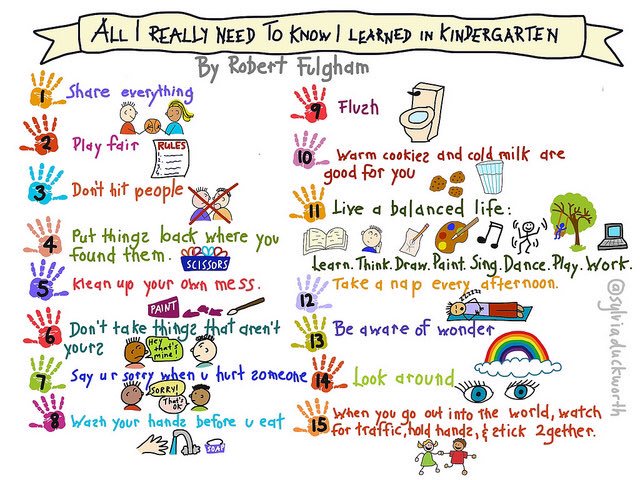
Due Friday, June 14th - All I Really Needed to Know I Learned in Mr. Pellerin's Freshmen English
Overview : Go back to our first blog, and walk through the 2018-2019 school year. Revisit the books we read and our class responses. Look...
-
Overview : We have been discussing the idea of self. How does one become an authentic self? This brings us back to "Allegory of...
-
 Overview : Go back to our first blog, and walk through the 2018-2019 school year. Revisit the books we read and our class responses. Look...
 -
Overview : The Shakespearean sonnet consists of three quatrains (four-line stanzas), rhyming abab cdcd efef, and a couplet (a two-line sta...