Directions: Please listen to Mr. Pellerin recite the Prologue to Romeo & Juliet. In this blog space, please post your initial thoughts. Given what you learned in the documentary about how Shakespeare "broke the mold," what do you anticipate will be different about this tragedy compared with other plays? What information does Shakespeare give us about the plot of the play in the prologue? What do you notice about the form and structure? He seems to give away the ending. What will happen in the end? In your opinion, why would Shakespeare give away the ending? This is a "live blog." Engage with each other.
Prologue
Two households, both alike in dignity,
In fair Verona, where we lay our scene,
From ancient grudge break to new mutiny,
Where civil blood makes civil hands unclean.
From forth the fatal loins of these two foes
A pair of star-cross'd lovers take their life;
Whose misadventured piteous overthrows
Do with their death bury their parents' strife.
The fearful passage of their death-mark'd love,
And the continuance of their parents' rage,
Which, but their children's end, nought could remove,
Is now the two hours' traffic of our stage;
The which if you with patient ears attend,
What here shall miss, our toil shall strive to mend.
Tuesday, January 1, 2019

Thursday, December 20, 2018
Shakespeare of the Day - Hamlet
DRAMATIS PERSONAE
CLAUDIUS king of Denmark.
HAMLET son to the late, and nephew to the present king.
POLONIUS lord chamberlain.
HORATIO friend to Hamlet.
LAERTES son to Polonius.
LUCIANUS nephew to the king.
VOLTIMAND, CORNELIUS, ROSENCRANTZ, GUILDENSTERN, OSRIC } courtiers.
A Gentleman,
A Priest.
MARCELLUS, BERNARDO } officers.
FRANCISCO a soldier.
REYNALDO servant to Polonius.
Players.
Two Clowns, grave-diggers.
FORTINBRAS prince of Norway.
A Captain.
English Ambassadors.
GERTRUDE queen of Denmark, and mother to Hamlet.
OPHELIA daughter to Polonius.
Lords, Ladies, Officers, Soldiers, Sailors, Messengers, and other Attendants.
Ghost of Hamlet’s Father.
Please peruse the "Shakespeare of the Day" selection: The Tragedy of Hamlet, Prince of Denmark. Which performance do you like best? Why?
CLAUDIUS king of Denmark.
HAMLET son to the late, and nephew to the present king.
POLONIUS lord chamberlain.
HORATIO friend to Hamlet.
LAERTES son to Polonius.
LUCIANUS nephew to the king.
VOLTIMAND, CORNELIUS, ROSENCRANTZ, GUILDENSTERN, OSRIC } courtiers.
A Gentleman,
A Priest.
MARCELLUS, BERNARDO } officers.
FRANCISCO a soldier.
REYNALDO servant to Polonius.
Players.
Two Clowns, grave-diggers.
FORTINBRAS prince of Norway.
A Captain.
English Ambassadors.
GERTRUDE queen of Denmark, and mother to Hamlet.
OPHELIA daughter to Polonius.
Lords, Ladies, Officers, Soldiers, Sailors, Messengers, and other Attendants.
Ghost of Hamlet’s Father.
(III. i. 64-96)
To be or not to be – that is the question:
Whether 'tis nobler in the mind to suffer
The slings and arrows of outrageous fortune,
Or to take arms against a sea of troubles
And, by opposing, end them. To die, to sleep –
No more – and by a sleep to say we end
The heartache and the thousand natural shocks
That flesh is heir to – `tis a consummation
Devoutly to be wished. To die, to sleep –
To sleep, perchance to dream. Ay, there's the rub,
For in that sleep of death what dreams may come,
When we have shuffled off this mortal coil,
Must give us pause. There's the respect
That makes calamity of so long life.
For who would bear the whips and scorns of time,
Th' oppressor's wrong, the proud man's contumely,
The pangs of despised love, the law's delay,
The insolence of office, and the spurns
That patient merit of th' unworthy takes,
When he himself might his quietus make
With a bare bodkin? Who would fardels bear,
To grunt and sweat under a weary life,
But that the dread of something after death,
The undiscovered country from whose bourn
No traveler returns, puzzles the will
And makes us rather bear those ills we have,
Than fly to others that we know not of?
Thus conscience does make cowards of us all,
And thus the native hue of resolution
Is sicklied o'er with the pale cast of thought,
And enterprises of great pitch and moment
With this regard their currents turn awry
And lose the name of action.
Below are four different interpretations of Hamlet's famous soliloquy from Act 3, scene 1.Please view all four clips in the following order:
1) 1948 - The timeless performance by Laurence Olivier.
2) 2000 - Ethan Hawke's Hamlet drifts into a Blockbuster video. Notice which section he walks through.
3) 1996 - Kenneth Brannah's Hamlet speaking a mirror image of himself (Note: Hamlet's Uncle Claudius and Polonius are hiding behind the glass).
4) 1990 - Mel Gibson's Hamlet - Notice the choice of location and the intensity of the performance.
To be or not to be – that is the question:
Whether 'tis nobler in the mind to suffer
The slings and arrows of outrageous fortune,
Or to take arms against a sea of troubles
And, by opposing, end them. To die, to sleep –
No more – and by a sleep to say we end
The heartache and the thousand natural shocks
That flesh is heir to – `tis a consummation
Devoutly to be wished. To die, to sleep –
To sleep, perchance to dream. Ay, there's the rub,
For in that sleep of death what dreams may come,
When we have shuffled off this mortal coil,
Must give us pause. There's the respect
That makes calamity of so long life.
For who would bear the whips and scorns of time,
Th' oppressor's wrong, the proud man's contumely,
The pangs of despised love, the law's delay,
The insolence of office, and the spurns
That patient merit of th' unworthy takes,
When he himself might his quietus make
With a bare bodkin? Who would fardels bear,
To grunt and sweat under a weary life,
But that the dread of something after death,
The undiscovered country from whose bourn
No traveler returns, puzzles the will
And makes us rather bear those ills we have,
Than fly to others that we know not of?
Thus conscience does make cowards of us all,
And thus the native hue of resolution
Is sicklied o'er with the pale cast of thought,
And enterprises of great pitch and moment
With this regard their currents turn awry
And lose the name of action.
Below are four different interpretations of Hamlet's famous soliloquy from Act 3, scene 1.Please view all four clips in the following order:
1) 1948 - The timeless performance by Laurence Olivier.
2) 2000 - Ethan Hawke's Hamlet drifts into a Blockbuster video. Notice which section he walks through.
3) 1996 - Kenneth Brannah's Hamlet speaking a mirror image of himself (Note: Hamlet's Uncle Claudius and Polonius are hiding behind the glass).
Wednesday, December 19, 2018
Shakespeare of the Day - Titus Andronicus
Players
Bassianus, brother to Saturninus, in love with Lavinia
Titus Andronicus, a Roman, general against the Goths
Marcus Andronicus, tribune of the people, and brother to Titus
Lucius, Quintus, Martius, Mutius, sons to Titus Andronicus
Lavinia, daughter to Titus Andronicus
Young Lucius, a boy, son to Lucius
Tamora, queen of the Goths
Alarbus, Demetrius, Chiron, sons to Tamora
Aaron, a Moor, beloved by Tamora
What, madam! be dishonour'd openly,
And basely put it up without revenge?
TAMORA
be won at last;
Dissemble all your griefs and discontents:
You are but newly planted in your throne;
Lest, then, the people, and patricians too,
Upon a just survey, take Titus' part,
And so supplant you for ingratitude,
Which Rome reputes to be a heinous sin,
Yield at entreats; and then let me alone:
I'll find a day to massacre them all
And raze their faction and their family,
The cruel father and his traitorous sons,
To whom I sued for my dear son's life,
And make them know what 'tis to let a queen
Kneel in the streets and beg for grace in vain. (1.1.18)
Tuesday, December 11, 2018
Introduction to Shakespeare - Take Notes
First Performed
|
Plays
|
First Printed
|
1590-91
|
Henry VI,
Part I (H)
|
1594?
|
1590-91
|
Henry VI,
Part II (H)
|
1594?
|
1591-92
|
Henry VI,
Part III (H)
|
1623
|
1592-93
|
Richard III (T)
|
1597
|
1592-93
|
Comedy of
Errors (C)
|
1623
|
1593-94
|
Titus
Andronicus (T)
|
1594
|
1593-94
|
1623
|
|
1594-95
|
1623
|
|
1594-95
|
1598?
|
|
1594-95
|
Romeo and
Juliet (T)
|
1597
|
1595-96
|
Richard II (T)
|
1597
|
1595-96
|
1600
|
|
1596-97
|
King John (H)
|
1623
|
1596-97
|
1600
|
|
1597-98
|
Henry IV,
Part I (H)
|
1598
|
1597-98
|
1600
|
|
1598-99
|
1600
|
|
1598-99
|
Henry V (H)
|
1600
|
1599-1600
|
Julius
Caesar (T)
|
1623
|
1599-1600
|
As You Like
It (C)
|
1623
|
1599-1600
|
Twelfth
Night (C)
|
1623
|
1600-01
|
Hamlet (T)
|
1603
|
1600-01
|
1602
|
|
1601-02
|
1609
|
|
1602-03
|
1623
|
|
1604-05
|
1623
|
|
1604-05
|
Othello (T)
|
1622
|
1605-06
|
King Lear (T)
|
1608
|
1605-06
|
Macbeth (T)
|
1623
|
1606-07
|
1623
|
|
1607-08
|
Coriolanus (T)
|
1623
|
1607-08
|
Timon of
Athens (T)
|
1623
|
1608-09
|
Pericles (R)
|
1609
|
1609-10
|
Cymbeline (T)
|
1623
|
1610-11
|
1623
|
|
1611-12
|
The Tempest (R)
|
1623
|
1612-13
|
Henry VIII (H)
|
1623
|
1612-13
|
1634
|
This chart shows samples of the changes in English.
#1 is Old English or Anglo-Saxon (circa 450-1066 CE).
#2 is Middle English (circa 1066-1450 AD).
#3 is Modern English from about the time of Shakespeare.
#4 is another sample of Modern English, but it is more recent than #3.

Note taking Questions:
1. We only know five facts about Shakespeare’s life. Please list them below. 2. Taking into account what little we know about Shakespeare, how is it possible that so many people write about his life?
3. Describe the Elizabethan era.
4. Who is Christopher Marlowe? Why is he important? How does his work differ from Shakespeare’s?
5. Name and describe the two most prominent theatres during Shakespeare’s time.
6. Who is Elizabeth? Why is she so important to our knowledge of Shakespeare?
7. Describe how clothes marked one’s social status.
8. How did William Shakespeare “Break the Mold” in theatre. In other words, why is he considered the greatest writer of all time?
Friday, November 30, 2018
Due Wednesday, December 19th - Poetry Literary Analysis Essay
Directions: I would like you to choose three poems, and compare and contrast the works using your own analysis and the poetic devises we have studied over the past three weeks. One of your works must be a sonnet. One must be from Billy Collins 180. The third can be any of your choice. My advice would be to use the poems you already analyzed, but that is not in any way mandatory. Please use the outline and rubric below as a guide in your experience. Remember to use the ten step process, and other materials I have provided in past blog posts. You will need to develop your own thesis statements which will be based on the thematic elements of the poems you selected. We will begin this process in small groups. Help each other get started.
Optional Working Outline
The D & F Essay
The C Essay
The B Essay
The A Essay
Optional Working Outline
- Introduction with thesis statement (1 paragraph)
- Part I (1-2 Paragraphs) – Poem one - Analysis and your opinion
- Part II (1-2 Paragraphs) – Poem two - Analysis and your opinion
- Part III (1-2 Paragraphs) – Poem three - Analysis and your opinion
- Part IV (1-2 Paragraphs) - Your personal analysis of the works
- Conclusion (1 Paragraph)
- Less than the requirements
- Incomplete
The C Essay
- Fulfills the criteria
- At least four body paragraphs, an intro and conclusion
- Analyzes three poems: one sonnet, one poetry 180 poem, and one of your choice
- Good understanding of three poems
- General thesis statement
The B Essay
- Covers the basics of the C essay and...
- Has the C elements
- Uses literary devices
- Three poems are carefully chosen and analyzed in depth
- Specific thesis statement
The A Essay
- Covers the more advanced elements of the B essay and...
- Has a thematic link among all three poems
- Literary devices are analyzed in how they make meaning in the works
- Smooth transitions from idea to idea
- Poems are complex and lend themselves to analysis
- The writing is passionate about the poems and uses literary devices properly
- Nuanced thesis statement
Make sure to use proper format and include a works cited.
Thursday, November 29, 2018
Classwork - Poem of the Day
Overview: We have been studying the origins of poetry through an exploration of sonnets. We learned about line breaks, enjambment, slant rhyme, exact rhyme, quatrains, couplets, sestets octets, extended metaphors, metaphysical conceits, and iambic pentameter just to name a few. We are now going to roam freely through poems from across various time periods. Exploring the ways the genre evolved to its present state.
Directions: I have been reading you a poem from Billy Collins' Poetry 180: Poem of the Day collection. Your task? I would like you to peruse his website and read some poetry. Choose a poem you feel a special connection to. Cut and paste the poem into your post and write a two paragraph response. The first paragraph will be about the technical aspects. How does the poem work? Use your knowledge of literary devices. In the second paragraph, explain how the poem captured the feelings of his/her/their subject. What experiences can you apply? If you do not finish this assignment in class, please complete the assignment for homework.
ALLITERATION - is the repetition of initial consonant sounds.
ALLUSION - is a direct or indirect reference to a familiar figure, place or event from history, literature, mythology or the Bible.
APOSTROPHE - a figure of speech in which a person not present is addressed.
ASSONANCE - is a close repetition of similar vowel sounds, usually in stressed syllables.
ATMOSPHERE / MOOD - is the prevailing feeling that is created in a story or poem.
CACOPHONY - Harsh sounds introduced for poetic effect - sometimes words that are difficult to pronounce.
CLICHE - an overused expression that has lost its intended force or novelty.
CONNOTATION - the emotional suggestions attached to words beyond their strict definitions.
CONSONANCE - the close repetition of identical consonant sounds before and after different vowels.
CONTRAST - the comparison or juxtaposition of things that are different
DENOTATION - the dictionary meaning of words.
DISSONANCE - the juxtaposition of harsh jarring sounds in one or more lines.
EUPHONY - agreeable sounds that are easy to articulate.
EXTENDED METAPHOR - an implied comparison between two things which are essentially not alike. These points of comparison are continued throughout the selection.
FIGURATIVE LANGUAGE - Language used in such a way as to force words out of their literal meanings by emphasizing their connotations to bring new insight and feeling to the subject.
HYPERBOLE - an exaggeration in the service of truth - an overstatement.
IDIOM - is a term or phrase that cannot be understood by a literal translation, but refers instead to a figurative meaning that is understood through common use.
IMAGERY - is the representation through language of sense experience. The image most often suggests a mental picture, but an image may also represent a sound, smell, taste or tactile experience.
IRONY - is a literary device which reveals concealed or contradictory meanings.
JARGON - language peculiar to a particular trade, profession or group.
JUXTAPOSITION - is the overlapping or mixing of opposite or different situations, characters, settings, moods, or points of view in order to clarify meaning, purpose, or character, or to heighten certain moods, especially humour, horror, and suspense. also Contrast
LITERAL LANGUAGE - what is said is based in reality without the comparisons used in figurative language.
LITOTES - a form of understatement in which something is said by denying the opposite.
METAPHOR - a comparison between two things which are essentially dissimilar. The comparison is implied rather than directly stated.
METER - any regular pattern of rhythm based on stressed and unstressed syllables.
METONYMY - use of a closely related idea for the idea itself.
MOOD - see atmosphere
ONOMATOPOEIA - the use of words which sound like what they mean.
OXYMORON - two words placed close together which are contradictory, yet have truth in them.
PARADOX - a statement in which there is an apparent contradiction which is actually true.
PERSONIFICATION - giving human attributes to an animal, object or idea.
RHYME - words that sound alike
RHYME SCHEME - any pattern of rhymes in poetry. Each new sound is assigned the next letter in the alphabet.
RHYTHM - a series of stressed or accented syllables in a group of words, arranged so that the reader expects a similar series to follow.
SIMILE - a comparison between two things which are essentially dissimilar. The comparison is directly stated through words such as like, as, than or resembles.
SPEAKER - the "voice" which seems to be telling the poem. Not the same as the poet; this is like a narrator.
SYMBOL - a symbol has two levels of meaning, a literal level and a figurative level. Characters, objects, events and settings can all be symbolic in that they represent something else beyond themselves.
SYNEDOCHE - the use of a part for the whole idea.
THEME - is the central idea of the story, usually implied rather than directly stated. It is the writer's idea abut life and can be implied or directly stated through the voice of the speaker. It should not be confused with moral or plot.
TONE - is the poet's attitude toward his/her subject or readers. it is similar to tone of voice but should not be confused with mood or atmosphere. An author's tone might be sarcastic, sincere, humourous.
TROPE - a figure of speech in which a word is used outside its literal meaning. Simile and metaphor are the two most common tropes.
UNDERSTATEMENT - this is saying less than what you mean in the service of truth.
VOICE - the creating and artistic intelligence that we recognize behind any speaker.
Directions: I have been reading you a poem from Billy Collins' Poetry 180: Poem of the Day collection. Your task? I would like you to peruse his website and read some poetry. Choose a poem you feel a special connection to. Cut and paste the poem into your post and write a two paragraph response. The first paragraph will be about the technical aspects. How does the poem work? Use your knowledge of literary devices. In the second paragraph, explain how the poem captured the feelings of his/her/their subject. What experiences can you apply? If you do not finish this assignment in class, please complete the assignment for homework.
Poem of the Day Website (See List of 180 Poems)
Poetry Literary Devices (There are links to Mr. Murry's cool webpage for more info)
ALLITERATION - is the repetition of initial consonant sounds.
ALLUSION - is a direct or indirect reference to a familiar figure, place or event from history, literature, mythology or the Bible.
APOSTROPHE - a figure of speech in which a person not present is addressed.
ASSONANCE - is a close repetition of similar vowel sounds, usually in stressed syllables.
ATMOSPHERE / MOOD - is the prevailing feeling that is created in a story or poem.
CACOPHONY - Harsh sounds introduced for poetic effect - sometimes words that are difficult to pronounce.
CLICHE - an overused expression that has lost its intended force or novelty.
CONNOTATION - the emotional suggestions attached to words beyond their strict definitions.
CONSONANCE - the close repetition of identical consonant sounds before and after different vowels.
CONTRAST - the comparison or juxtaposition of things that are different
DENOTATION - the dictionary meaning of words.
DISSONANCE - the juxtaposition of harsh jarring sounds in one or more lines.
EUPHONY - agreeable sounds that are easy to articulate.
EXTENDED METAPHOR - an implied comparison between two things which are essentially not alike. These points of comparison are continued throughout the selection.
FIGURATIVE LANGUAGE - Language used in such a way as to force words out of their literal meanings by emphasizing their connotations to bring new insight and feeling to the subject.
HYPERBOLE - an exaggeration in the service of truth - an overstatement.
IDIOM - is a term or phrase that cannot be understood by a literal translation, but refers instead to a figurative meaning that is understood through common use.
IMAGERY - is the representation through language of sense experience. The image most often suggests a mental picture, but an image may also represent a sound, smell, taste or tactile experience.
IRONY - is a literary device which reveals concealed or contradictory meanings.
JARGON - language peculiar to a particular trade, profession or group.
JUXTAPOSITION - is the overlapping or mixing of opposite or different situations, characters, settings, moods, or points of view in order to clarify meaning, purpose, or character, or to heighten certain moods, especially humour, horror, and suspense. also Contrast
LITERAL LANGUAGE - what is said is based in reality without the comparisons used in figurative language.
LITOTES - a form of understatement in which something is said by denying the opposite.
METAPHOR - a comparison between two things which are essentially dissimilar. The comparison is implied rather than directly stated.
METER - any regular pattern of rhythm based on stressed and unstressed syllables.
METONYMY - use of a closely related idea for the idea itself.
MOOD - see atmosphere
ONOMATOPOEIA - the use of words which sound like what they mean.
OXYMORON - two words placed close together which are contradictory, yet have truth in them.
PARADOX - a statement in which there is an apparent contradiction which is actually true.
PERSONIFICATION - giving human attributes to an animal, object or idea.
RHYME - words that sound alike
RHYME SCHEME - any pattern of rhymes in poetry. Each new sound is assigned the next letter in the alphabet.
RHYTHM - a series of stressed or accented syllables in a group of words, arranged so that the reader expects a similar series to follow.
SIMILE - a comparison between two things which are essentially dissimilar. The comparison is directly stated through words such as like, as, than or resembles.
SPEAKER - the "voice" which seems to be telling the poem. Not the same as the poet; this is like a narrator.
SYMBOL - a symbol has two levels of meaning, a literal level and a figurative level. Characters, objects, events and settings can all be symbolic in that they represent something else beyond themselves.
SYNEDOCHE - the use of a part for the whole idea.
THEME - is the central idea of the story, usually implied rather than directly stated. It is the writer's idea abut life and can be implied or directly stated through the voice of the speaker. It should not be confused with moral or plot.
TONE - is the poet's attitude toward his/her subject or readers. it is similar to tone of voice but should not be confused with mood or atmosphere. An author's tone might be sarcastic, sincere, humourous.
TROPE - a figure of speech in which a word is used outside its literal meaning. Simile and metaphor are the two most common tropes.
UNDERSTATEMENT - this is saying less than what you mean in the service of truth.
VOICE - the creating and artistic intelligence that we recognize behind any speaker.
Monday, November 26, 2018
Due Thursday, November 29th - Metaphysical Poetry & Modern Sonnets
Directions: Read the material below on metaphysical poetry, as well as the three poems by John Donne. Next, read the modern sonnets. In this blog space, please select a poem from below or from the link provided. Cut and paste the sonnet into your post and comment on the poem in making comparisons to the various sonnet forms we have analyzed thus far:
Link to poetry.org section on sonnets: https://www.poets.org/poetsorg/poems?field_form_tid=424
Part I - Overview of Metaphysical Poetry & John Donne
John Donne was born in 1572 in London, England. He is known as the founder of the Metaphysical Poets, a term created by Samuel Johnson, an eighteenth-century English essayist, poet, and philosopher. His wife, aged thirty-three, died in 1617 shortly after giving birth to their twelfth child, a stillborn. The Holy Sonnets are also attributed to this phase of his life.
The term "metaphysical poetry" is used to describe a certain type of 17th century poetry. The term was originally intended to be derogatory; Dryden, who said Donne "affects the metaphysics," was criticizing Donne for being too arcane. Samuel Johnson later used the term "metaphysical poetry" to describe the specific poetic method used by poets like Donne.
Metaphysical poets are generally in rebellion against the highly conventional imagery of the Elizabethan lyric. The poems tend to be intellectually complex, and (according to the Holman Handbook), "express honestly, if unconventionally, the poet's sense of the complexities and contradictions of life." The verse often sounds rough in comparison to the smooth conventions of other poets; Ben Jonson once said that John Donne "deserved hanging" for the way he ran roughshod over conventional rhythms. The result is that these poems often lack lyric smoothness, but they instead use a rugged irregular movement that seems to suit the content of the poems.
For an example of metaphysical rebellion against lyrical convention, one can look at Donne's Holly Sonnet VI, below.
"Holy Sonnet VI"
Link to poetry.org section on sonnets: https://www.poets.org/poetsorg/poems?field_form_tid=424
Part I - Overview of Metaphysical Poetry & John Donne
John Donne was born in 1572 in London, England. He is known as the founder of the Metaphysical Poets, a term created by Samuel Johnson, an eighteenth-century English essayist, poet, and philosopher. His wife, aged thirty-three, died in 1617 shortly after giving birth to their twelfth child, a stillborn. The Holy Sonnets are also attributed to this phase of his life.
The term "metaphysical poetry" is used to describe a certain type of 17th century poetry. The term was originally intended to be derogatory; Dryden, who said Donne "affects the metaphysics," was criticizing Donne for being too arcane. Samuel Johnson later used the term "metaphysical poetry" to describe the specific poetic method used by poets like Donne.
Metaphysical poets are generally in rebellion against the highly conventional imagery of the Elizabethan lyric. The poems tend to be intellectually complex, and (according to the Holman Handbook), "express honestly, if unconventionally, the poet's sense of the complexities and contradictions of life." The verse often sounds rough in comparison to the smooth conventions of other poets; Ben Jonson once said that John Donne "deserved hanging" for the way he ran roughshod over conventional rhythms. The result is that these poems often lack lyric smoothness, but they instead use a rugged irregular movement that seems to suit the content of the poems.
For an example of metaphysical rebellion against lyrical convention, one can look at Donne's Holly Sonnet VI, below.
"Holy Sonnet VI"
by John Donne, 1610
Death, be not proud, though some have called thee
Mighty and dreadful, for thou art not so,
For those, whom thou think'st thou dost overthrow,
Die not, poor death, nor yet canst thou kill me.
From rest and sleep, which but thy pictures be,
Much pleasure, then from thee much more must flow,
And soonest our best men with thee do go,
Rest of their bones, and soul's deliverie.
Thou'rt slave to fate, chance, kings, and desperate men,
And dost with poyson, war, and sickness dwell,
And poppy, or charms can make us sleep as well,
And better than thy stroke; why swell'st thou then ?
One short sleep past, we wake eternally,
And death shall be no more, Death thou shalt die.
The poem personifies death through an extended metaphor. It speaks to death as if poking fun at its history of being known as “mighty and dreadful, for thou art not so” according to the narrator. The speaker even goes so far as to say “nor canst thou kill me.” This ends the first stanza and is much more interesting and off putting than “Shall I compare thee to a summer’s day” or Let me not to the marriage of true minds” by Shakespeare.
That the punctuation is just as vital to the meaning of the work. In addition to challenging the conventions of rhythm, the metaphysical poets also challenged conventional imagery. Their tool for doing this was the metaphysical conceit. A conceit is a poetic idea, usually a metaphor. There can be conventional ideas, where there are expected metaphors: Petrarchan conceits imitate the metaphors used by the Italian poet Petrarch. Metaphysical conceits are noteworthy specifically for their lack of conventionality. In general, the metaphysical conceit will use some sort of shocking or unusual comparison as the basis for the metaphor. When it works, a metaphysical conceit has a startling appropriateness that makes us look at something in an entirely new way.
In the sonnet above, he last line is what does it for me, though and it was utilized brilliantly in Maraget Edison’s Wit.
Some editions of the text present the last line as follows:
And Death shall be no more; Death thou shalt die!
In the Gardner edition, it is presented as follows:
And death shall be no more, Death thou shalt die.
As stated in Edison’s play “Nothing but a breath. A comma separates life from eternal life.” Therefore, the metaphysical conceit of the sonnet is that when you die you live forever.
"Holy Sonnet IV"
![]() This is my play's last scene; here heavens appoint
This is my play's last scene; here heavens appoint
My pilgrimage's last mile, and my race
Idly, yet quickly run, hath this last pace,
My span's last inch, my minute's latest point,
And gluttonous death will instantly unjoint
My body and soul, and I shall sleep a space,
But my ever-waking part shall see that face,
Whose fear already shakes my every joint.
Then, as my soul to heaven her first seat takes flight,
And earth-born body in the earth shall dwell,
So fall my sins, that all may have their right,
To where they're bred and would press me to hell.
Impute me righteous, thus purged of evil,
For thus I leave the world, the flesh, the devil.
Part II - Modern Sonnets
"Sonnet XLIII"
Death, be not proud, though some have called thee
Mighty and dreadful, for thou art not so,
For those, whom thou think'st thou dost overthrow,
Die not, poor death, nor yet canst thou kill me.
From rest and sleep, which but thy pictures be,
Much pleasure, then from thee much more must flow,
And soonest our best men with thee do go,
Rest of their bones, and soul's deliverie.
Thou'rt slave to fate, chance, kings, and desperate men,
And dost with poyson, war, and sickness dwell,
And poppy, or charms can make us sleep as well,
And better than thy stroke; why swell'st thou then ?
One short sleep past, we wake eternally,
And death shall be no more, Death thou shalt die.
The poem personifies death through an extended metaphor. It speaks to death as if poking fun at its history of being known as “mighty and dreadful, for thou art not so” according to the narrator. The speaker even goes so far as to say “nor canst thou kill me.” This ends the first stanza and is much more interesting and off putting than “Shall I compare thee to a summer’s day” or Let me not to the marriage of true minds” by Shakespeare.
That the punctuation is just as vital to the meaning of the work. In addition to challenging the conventions of rhythm, the metaphysical poets also challenged conventional imagery. Their tool for doing this was the metaphysical conceit. A conceit is a poetic idea, usually a metaphor. There can be conventional ideas, where there are expected metaphors: Petrarchan conceits imitate the metaphors used by the Italian poet Petrarch. Metaphysical conceits are noteworthy specifically for their lack of conventionality. In general, the metaphysical conceit will use some sort of shocking or unusual comparison as the basis for the metaphor. When it works, a metaphysical conceit has a startling appropriateness that makes us look at something in an entirely new way.
In the sonnet above, he last line is what does it for me, though and it was utilized brilliantly in Maraget Edison’s Wit.
Some editions of the text present the last line as follows:
And Death shall be no more; Death thou shalt die!
In the Gardner edition, it is presented as follows:
And death shall be no more, Death thou shalt die.
As stated in Edison’s play “Nothing but a breath. A comma separates life from eternal life.” Therefore, the metaphysical conceit of the sonnet is that when you die you live forever.
"Holy Sonnet IV"
by John Donne, 1610
If poysonous minerals, and if that tree,
Whose fruit threw death on else immortal us,
If lecherous goats, if serpents envious
Cannot be damn'd, Alas ! why should I be?
Why should intent or reason, born in me,
Make sins, else equal, in me more heinous?
And, mercy being easie, and glorious
To God, in his stern wrath why threatens hee?
But who am I, that dare dispute with thee?
O God, Oh! of thine only worthy blood,
And my teares, make a heavenly Lethean flood,
And drown in it my sinnes blacke memorie.
That thou remember them, some claime as debt,
I thinke it mercy if thou wilt forget.
"Holy Sonnet X"
If poysonous minerals, and if that tree,
Whose fruit threw death on else immortal us,
If lecherous goats, if serpents envious
Cannot be damn'd, Alas ! why should I be?
Why should intent or reason, born in me,
Make sins, else equal, in me more heinous?
And, mercy being easie, and glorious
To God, in his stern wrath why threatens hee?
But who am I, that dare dispute with thee?
O God, Oh! of thine only worthy blood,
And my teares, make a heavenly Lethean flood,
And drown in it my sinnes blacke memorie.
That thou remember them, some claime as debt,
I thinke it mercy if thou wilt forget.
"Holy Sonnet X"
by John Donne, 1610
My pilgrimage's last mile, and my race
Idly, yet quickly run, hath this last pace,
My span's last inch, my minute's latest point,
And gluttonous death will instantly unjoint
My body and soul, and I shall sleep a space,
But my ever-waking part shall see that face,
Whose fear already shakes my every joint.
Then, as my soul to heaven her first seat takes flight,
And earth-born body in the earth shall dwell,
So fall my sins, that all may have their right,
To where they're bred and would press me to hell.
Impute me righteous, thus purged of evil,
For thus I leave the world, the flesh, the devil.
Part II - Modern Sonnets
"Sonnet XLIII"
by Edna St. Vincent Millay, 1956
What lips my lips have kissed, and where, and why,
Applauding youths laughed with young prostitutes
I have forgotten, and what arms have lain
Under my head till morning; but the rain
Is full of ghosts tonight, that tap and sigh
Upon the glass and listen for reply,
And in my heart there stirs a quiet pain
For unremembered lads that not again
Will turn to me at midnight with a cry.
Thus in winter stands the lonely tree,
Nor knows what birds have vanished one by one,
Yet knows its boughs more silent than before:
I cannot say what loves have come and gone,
I only know that summer sang in me
A little while, that in me sings no more.
"Florida Doll Sonnet"
by Denise Duhamel, 1961
I love Fresh Market but always feel underdressed
squeezing overpriced limes. Louis Vuitton,
Gucci, Fiorucci, and all the ancient East Coast girls
with their scarecrow limbs and Joker grins.
Their silver fox husbands, rosy from tanning beds,
steady their ladies who shuffle along in Miu Miu’s
(not muumuus) and make me hide behind towers
of handmade soaps and white pistachios. Who
knew I’d still feel like the high school fat girl
some thirty-odd years later? My Birkenstocks
and my propensity for fig newtons? Still, whenever
I’m face to face with a face that is no more real
than a doll’s, I try to love my crinkles, my saggy
chin skin. My body organic, with no preservatives.
"The Harlem Dancer"
by Denise Duhamel, 1961
I love Fresh Market but always feel underdressed
squeezing overpriced limes. Louis Vuitton,
Gucci, Fiorucci, and all the ancient East Coast girls
with their scarecrow limbs and Joker grins.
Their silver fox husbands, rosy from tanning beds,
steady their ladies who shuffle along in Miu Miu’s
(not muumuus) and make me hide behind towers
of handmade soaps and white pistachios. Who
knew I’d still feel like the high school fat girl
some thirty-odd years later? My Birkenstocks
and my propensity for fig newtons? Still, whenever
I’m face to face with a face that is no more real
than a doll’s, I try to love my crinkles, my saggy
chin skin. My body organic, with no preservatives.
"The Harlem Dancer"
by Claude McKay, 1922
Applauding youths laughed with young prostitutes
And watched her perfect, half-clothed body sway;
Her voice was like the sound of blended flutes
Blown by black players upon a picnic day.
She sang and danced on gracefully and calm,
The light gauze hanging loose about her form;
To me she seemed a proudly-swaying palm
Grown lovelier for passing through a storm.
Upon her swarthy neck black shiny curls
Luxuriant fell; and tossing coins in praise,
The wine-flushed, bold-eyed boys, and even the girls,
Devoured her shape with eager, passionate gaze;
But looking at her falsely-smiling face,
I knew her self was not in that strange place.
"Ever"
"Ever"
by Meghan O'Rourke, 2015
Never, never, never, never, never.
—King Lear
Even now I can’t grasp “nothing” or “never.”
They’re unholdable, unglobable, no map to nothing.
Never? Never ever again to see you?
An error, I aver. You’re never nothing,
because nothing’s not a thing.
I know death is absolute, forever,
the guillotine—gutting—never to which we never say goodbye.
But even as I think “forever” it goes “ever”
and “ever” and “ever.” Ever after.
I’m a thing that keeps on thinking. So I never see you
is not a thing or think my mouth can ever. Aver:
You’re not “nothing.” But neither are you something.
Will I ever really get never?
You’re gone. Nothing, never—ever.
"Superheroes as 2004 Volkswagen Passat: A Double Sonnet"
by Bruce Covey, 2012
The Invisible Woman is the windshield.
Never, never, never, never, never.
—King Lear
Even now I can’t grasp “nothing” or “never.”
They’re unholdable, unglobable, no map to nothing.
Never? Never ever again to see you?
An error, I aver. You’re never nothing,
because nothing’s not a thing.
I know death is absolute, forever,
the guillotine—gutting—never to which we never say goodbye.
But even as I think “forever” it goes “ever”
and “ever” and “ever.” Ever after.
I’m a thing that keeps on thinking. So I never see you
is not a thing or think my mouth can ever. Aver:
You’re not “nothing.” But neither are you something.
Will I ever really get never?
You’re gone. Nothing, never—ever.
"Superheroes as 2004 Volkswagen Passat: A Double Sonnet"
by Bruce Covey, 2012
The Invisible Woman is the windshield.
Mr. Fantastic is the wiper fluid.
The Thing is the tire.
The Human Torch is the spark plug.
Spiderman is the antenna.
Storm is the ignition coil.
Rogue is the crank shaft.
The Punisher is the exhaust pipe.
Captain America is the hub cap.
Quicksilver is the oil.
Rogue is the gasoline.
Psylocke is the catalytic converter.
The Hulk is the cylinder block.
She Hulk is the mount.
Mantis is the manifold.
Ms. Marvel is the muffler.
The Scarlet Witch is the instrument panel.
Iceman is the cooling system.
Wolverine is the hood.
Colossus is the camshaft.
Banshee is the horn.
Polaris is the voltage regulator.
Silver Surfer is the rearview mirror.
Powerman is the bearing.
Phoenix is the powertrain.
Emma Frost is the hinge pillar.
The Vision is the fuse box.
Black Widow is the brake.
Subscribe to:
Posts (Atom)
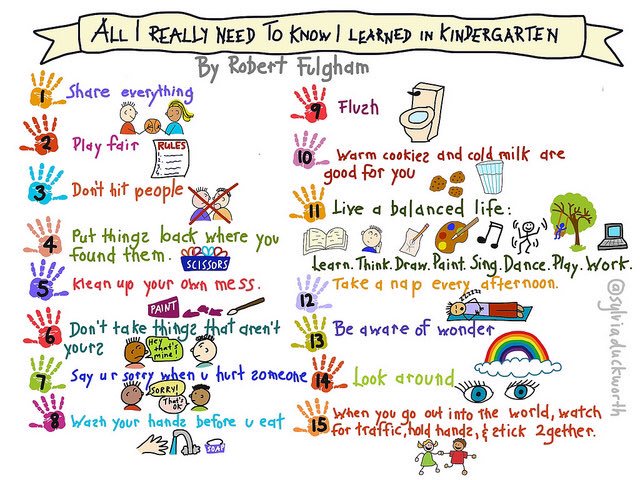
Due Friday, June 14th - All I Really Needed to Know I Learned in Mr. Pellerin's Freshmen English
Overview : Go back to our first blog, and walk through the 2018-2019 school year. Revisit the books we read and our class responses. Look...
-
 Overview : Go back to our first blog, and walk through the 2018-2019 school year. Revisit the books we read and our class responses. Look...
 -
Overview : We have been discussing the idea of self. How does one become an authentic self? This brings us back to "Allegory of...
-
Overview : In Anthem, we witness a society in which the government wishes to control its population by training its citizens from birth. ...